
How African Libraries Are Preserving Cultural Heritage
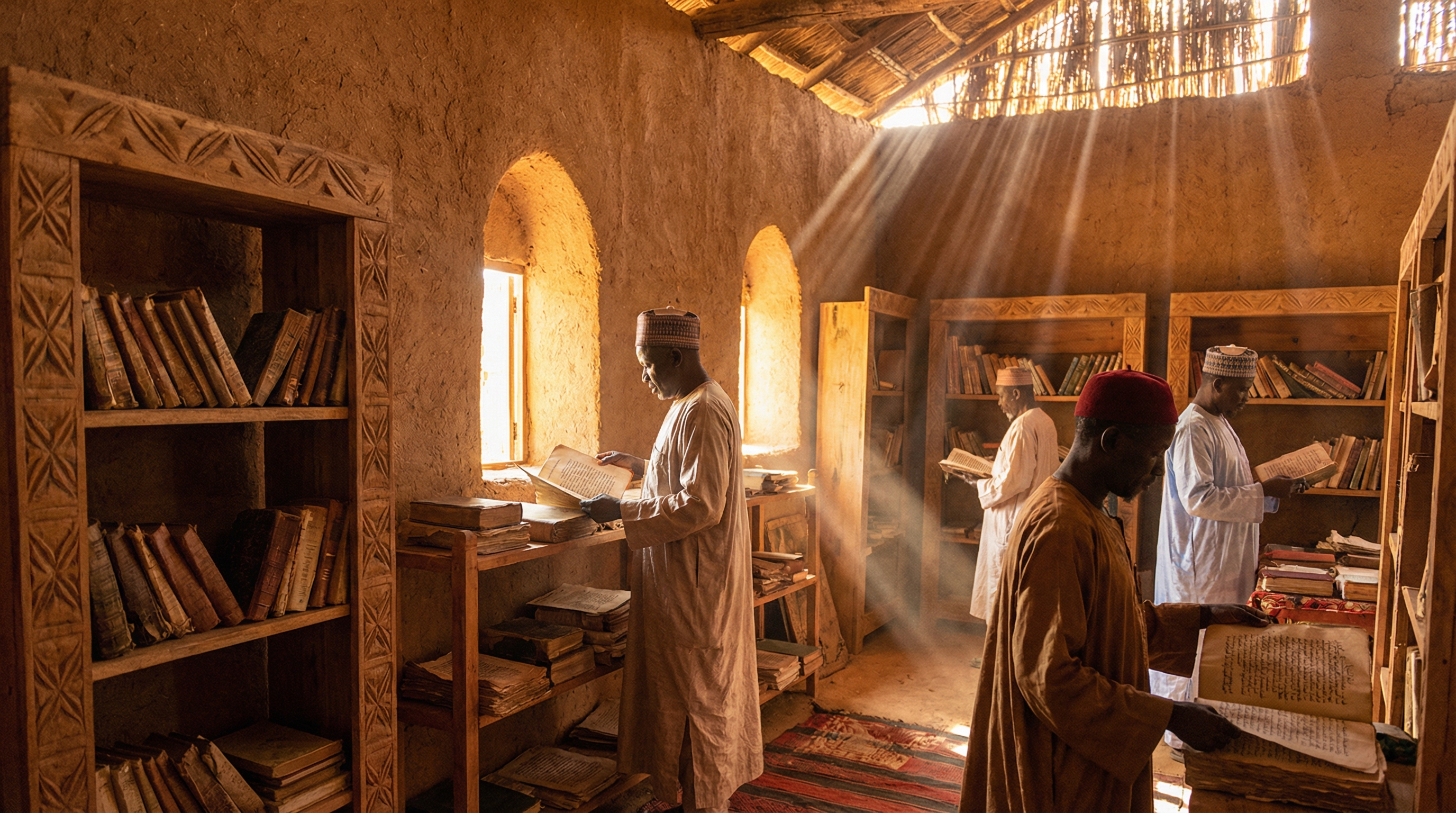
Africa is home to some of the oldest libraries in the world. The great libraries of Timbuktu held hundreds of thousands of manuscripts covering science, theology, law, and philosophy -- written in Arabic and African languages centuries before European contact. The Library of Alexandria, one of antiquity's most celebrated institutions, sat on African soil. The continent's tradition of knowledge preservation is ancient and deep.
And yet, today, African libraries face challenges that threaten both their collections and their ability to serve their communities. Funding shortages, inadequate infrastructure, the effects of conflict, and the slow decay of materials not suited to tropical climates are all real and pressing problems.
But across the continent, librarians, archivists, scholars, and community organisations are fighting back -- using new technologies, community partnerships, and creative funding models to ensure that Africa's cultural heritage survives for future generations.
The Timbuktu Manuscripts: A Story of Loss and Survival
The story of the Timbuktu manuscripts is both inspiring and sobering.
For centuries, the ancient city of Timbuktu in Mali was one of the world's great centres of Islamic learning. At its height, the city had over 150 Quranic schools and a university attended by as many as 25,000 students. The private libraries of Timbuktu's scholarly families accumulated hundreds of thousands of manuscripts -- some estimates put the figure at over 700,000 -- covering subjects from astronomy to medicine to history to poetry.
When French colonial forces entered Timbuktu in the 19th century, many families hid their manuscripts rather than surrender them to foreign control. The manuscripts remained hidden for generations, passed down within families as sacred objects.
In the 1990s and 2000s, a major international effort began to locate, catalogue, and digitise these manuscripts. The Ahmed Baba Institute, established in Timbuktu and later supported by the South African government, became the hub of this work. Tens of thousands of manuscripts were catalogued and digitised before the 2012 crisis.
When jihadist groups seized Timbuktu in 2012, librarians and community members launched one of the most dramatic preservation operations in modern history. Under cover of darkness, they smuggled hundreds of thousands of manuscripts out of the city in rice sacks, hiding them in private homes and eventually transporting them to safety in Bamako. It is estimated that the majority of the most significant manuscripts survived.
This story illustrates both the fragility of African cultural heritage and the determination of African communities to protect it.
The Role of National Libraries
Every African country has a national library, and these institutions serve as the primary custodians of each nation's published heritage. In Ghana, the Ghana Library Authority operates a network of public libraries across the country as well as the national collection.
In recent years, the Ghana Library Authority has undertaken significant modernisation efforts, including digitisation of historical materials, expansion of services to rural communities, and introduction of digital reading programs. The COVID-19 pandemic accelerated some of these changes, as libraries were forced to develop digital service offerings to remain relevant during closures.
Nigeria's National Library has similar programs, as does Kenya's Kenya National Library Service -- one of the more robustly funded national library systems on the continent. Kenya has invested significantly in public library infrastructure, with a network of libraries reaching into rural counties.
These national institutions face significant resource constraints, but they are not simply passive repositories. Many are actively engaged in oral history documentation, digitisation of newspapers and periodicals, and community outreach programs designed to build reading culture among young people.
University Libraries and Research Collections
Africa's university libraries hold some of the continent's most significant collections for research purposes. The Balme Library at the University of Ghana is home to the West African Collection -- a rich archive of materials on Ghanaian and West African history, including rare books, government documents, and photographs dating back to the colonial period.
The University of Ibadan Library in Nigeria holds one of the most important collections of African literature and history on the continent. The Africana Collection at the University of Cape Town includes the BC Collection -- thousands of boxes of papers and documents from individuals, organisations, and institutions involved in South Africa's political history.
These university libraries are increasingly engaged in digitisation projects that make their collections more accessible to researchers who cannot travel to them in person. Open access digital repositories like the African Journals OnLine (AJOL) and the Digital Library of the Commons are making African scholarship available to readers worldwide.
Community Archives and Oral History Projects
Some of the most innovative preservation work is happening outside formal library institutions, in community-based archives and oral history projects.
In Ghana, organisations like the Oral History and Cultural Heritage Documentation Project have worked to record the testimonies of elders -- capturing knowledge about traditional medicine, farming practices, local history, and cultural ceremonies that would otherwise die with those individuals.
In South Africa, the District Six Museum in Cape Town has built an extraordinary community archive documenting the history of the mixed-race neighborhood that was demolished under apartheid's Group Areas Act. The archive consists not only of documents and photographs but of objects, personal testimonies, and participatory mapping projects through which former residents have literally re-drawn their neighbourhood from memory.
These community archives operate on a different logic from national libraries. They are not primarily concerned with the published record. They are concerned with living memory -- with the knowledge that exists in communities rather than in books, and that is just as threatened by time and social change as any manuscript.
Digital Libraries and the Future of Access
One of the most significant developments in African library work over the past decade has been the growth of digital library projects that aim to make African knowledge accessible regardless of geography.
The Sankofa Library is part of this movement. By digitising and making available texts that were previously accessible only in physical collections in specific institutions, digital libraries are democratising access to African knowledge in ways that were impossible even 20 years ago.
Other significant digital initiatives include the African Books Collective, which distributes African-published books internationally, and the Internet Archive's partnerships with African libraries to digitise physical collections.
Mobile technology is playing an increasingly important role. In countries where smartphone penetration is higher than computer ownership, library apps and mobile-optimised reading platforms are reaching audiences that traditional libraries could not serve.
The Challenge of Language
One of the most persistent challenges for African libraries is the language question. The majority of published books in African library collections are in European languages -- primarily English, French, and Portuguese -- because those were the languages of colonial publishing infrastructure and they remain the dominant languages of African higher education and publishing today.
But Africa's indigenous languages carry knowledge, literature, and history that is not recorded in any European language. The proverbs, stories, songs, and philosophical frameworks of the Akan, the Yoruba, the Zulu, the Amhara, and hundreds of other communities exist primarily in oral form -- and when the elders who carry them die without their knowledge being recorded, it is lost.
Libraries and cultural organisations across the continent are working to change this. Projects like the African Storybook Initiative produce children's books in African languages. Academic publishers are increasingly releasing works in Kiswahili, Hausa, Yoruba, and other major African languages. But the scale of the challenge is enormous.
Why This Work Matters
Libraries are not neutral institutions. They are arguments -- arguments about what knowledge matters, whose history deserves to be remembered, and who gets to shape the narrative of the future.
For Africa, which spent centuries having its history written by others, having its cultural productions dismissed or stolen, and having its intellectual traditions treated as inferior to European ones, the work of building, sustaining, and expanding African libraries is a form of cultural self-determination.
The Sankofa Library is part of that project. Browse its catalog. Use it. Share it. The act of reading African literature and African thought is itself a contribution to the preservation of African cultural heritage.