Keyboard shortcuts
- J: Next chapter
- K: Previous chapter
- T: Toggle table of contents
- Shift+S: Share book
- +: Increase font size
- -: Decrease font size
- Escape: Close modals

Echoes of Accra: Tracing Ghana's Pivotal Role in the Afrobeats Revolution, from Highlife Roots to Global Stages
- Highlife
- Hiplife
- Afrobeats
- Ghanaian Music
- Cultural Identity
- Azonto
- Accra
- Music Industry
- Pan-Africanism
- Diaspora
Chapter 1
The Genesis of Ghanaian Sound: Highlife's Enduring Legacy
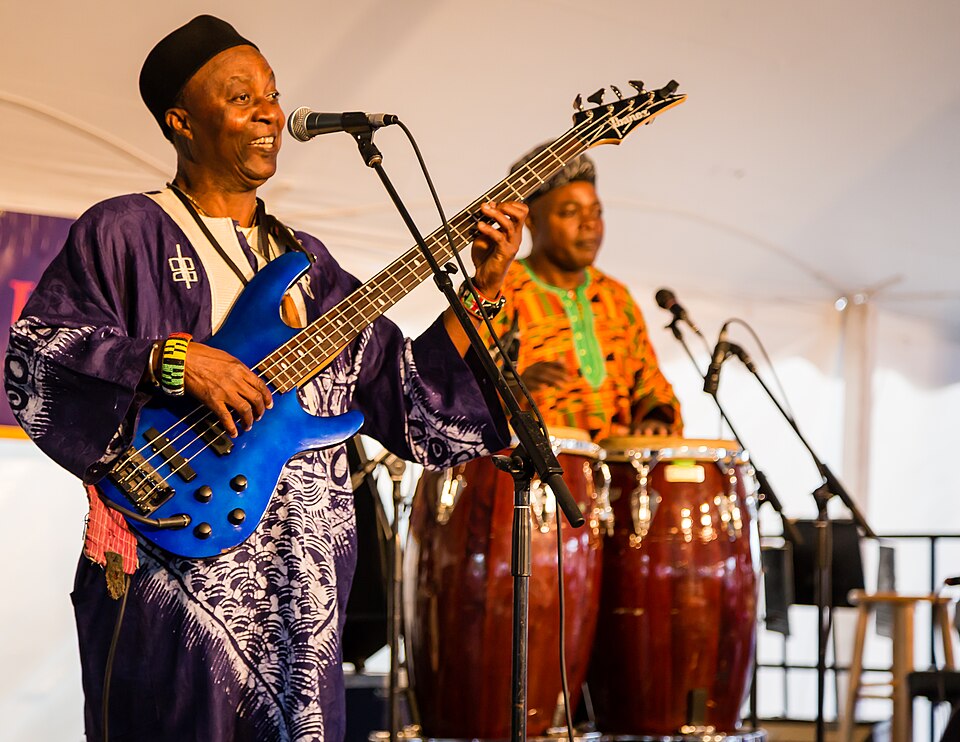
The story of Ghanaian music begins not in recording studios but in the palm-wine bars of coastal Gold Coast towns in the 1880s, where dock workers and sailors gathered to drink freshly tapped raffia palm wine and listen to local musicians plucking portable guitars brought by Portuguese and German traders. This acoustic tradition, known as palm-wine music, blended Fante osibisaaba rhythms with Western string instruments in a syncopated 4/4 metre that would become the DNA of everything that followed.
The first Ghanaian musician to commit this sound to wax was Jacob Asare, known as Kwame Asare or Jacob Sam. In June 1928, he and the Kumasi Trio travelled to London and recorded "Yaa Amponsah" for the Zonophone label, a song that remains the most covered composition in Ghanaian music history, its two-finger plucking guitar style becoming the signature of the genre.
By the 1920s, a parallel stream had emerged: brass-band highlife, born when Gold Coast musicians recruited into British colonial military bands fused their linear marching music with polyrhythmic local traditions, creating the danceable adaha style. The term "highlife" itself appeared in early 1920s Accra, coined by working-class Ghanaians who could not afford the 7s 6d entrance fee at exclusive clubs like those hosting the Jazz Kings, the Cape Coast Sugar Babies, and the Accra Orchestra. As dance band leader Yebuah Mensah told musicologist John Collins in 1973, "the people outside called it the highlife as they did not reach the class of the couples going inside."
The genre's golden age arrived with Emmanuel Tettey Mensah, born 31 May 1919 in Accra. E.T. Mensah joined the Tempos Band in 1947, rapidly becoming its leader and transforming palm-wine acoustics into a full orchestral sound with jazzy horns, trumpets, and saxophones. When Louis Armstrong visited Accra on 24 May 1956 and jammed with the Tempos at the Paramount Club, it was a coronation: Armstrong reportedly said he had "never heard such music." E.T. Mensah toured West Africa relentlessly, earning the title "King of Highlife," and his hit "Ghana Freedom" became the unofficial soundtrack of independence in 1957.
Alongside the dance bands, the guitar-band tradition flourished through Kwaa Mensah (taught by his uncle Kwame Asare), E.K. Nyame (whose Akan Concert Party fused theatre with highlife from the 1950s), and the prolific Nana Ampadu, who composed over 800 songs with his African Brothers Band from 1963 onwards, embedding proverbs, political commentary, and moral philosophy into three-minute pop songs. In 2025, UNESCO inscribed Ghanaian highlife music and dance on its Representative List of Intangible Cultural Heritage, a formal recognition of a century-old tradition that birthed an entire musical civilisation.
About This Book
"Echoes of Accra" meticulously charts the evolution of Ghanaian music, focusing on its pivotal role in shaping the Afrobeats revolution. Beginning in the 1920s, the book explores the birth of Highlife, detailing how it emerged from a confluence of social, political, and cultural forces in colonial Ghana. It analyzes the influence of Kru seamen, the adoption of Western instruments, and the fusion of indigenous Akan musical traditions with European ballroom styles. The narrative highlights the pioneering contributions of figures like E.T. Mensah and his Tempos Band, as well as other key Highlife musicians who crafted the genre's distinctive sound and used it to voice both aspirations for independence and critiques of colonial rule. The book examines the “golden age” of Highlife in the 1960s and 70s, exploring its diversification into various subgenres like Guitar-band Highlife and its use as a tool for nation-building under Kwame Nkrumah. It doesn’t shy away from the challenges Highlife faced, including economic instability and the rise of disco and other Western musical imports in the late 20th century, detailing how Ghanaian musicians adapted and innovated to maintain their relevance. Crucially, "Echoes of Accra" connects Highlife to the emergence of Afrobeats, demonstrating how its rhythms, melodies, and socio-political consciousness profoundly influenced subsequent generations of Ghanaian artists. The book explores the role of hiplife, a fusion of Highlife and hip-hop, as a bridge between these genres, and analyzes the contributions of contemporary Ghanaian Afrobeats artists like Sarkodie, Stonebwoy, and Shatta Wale in shaping the global sound of Afrobeats. It details how these artists, while embracing global trends, continue to draw inspiration from Ghana's rich musical heritage, solidifying Ghana's place at the forefront of African musical innovation. Readers will gain a deep understanding of Ghana's musical journey and its undeniable impact on the global music scene.
About the Author
The study of Ghanaian music, particularly Highlife and its influence on Afrobeats, benefits from a robust tradition of scholarship. Figures like John Collins, whose extensive research and writings have been instrumental in documenting Highlife's history, techniques, and social impact, lay the groundwork for understanding the genre's complexities. Similarly, scholars such as Kofi Agawu have examined the theoretical underpinnings of African music, providing analytical frameworks for understanding Highlife's musical structures. E.T. Mensah himself, through his recordings and performances, serves as a primary source, allowing scholars to engage directly with the genre's origins. More recently, researchers have focused on the evolution of hiplife and Afrobeats, analyzing their hybridity, global reach, and the ways they reflect contemporary Ghanaian experiences. This book draws upon this rich body of work, engaging with existing scholarship while offering fresh perspectives on Ghana's musical journey.
Key Themes
- Highlife Music
- Afrobeats
- Ghanaian Identity
- Musical Innovation
- Cultural Hybridity
- Postcolonialism
Why This Matters
Understanding the trajectory of Ghanaian music, from Highlife to Afrobeats, is crucial for grasping the evolution of Ghanaian and African identity in the 20th and 21st centuries. Highlife served as a soundtrack to Ghana's independence movement and early nation-building efforts, embodying the hopes and aspirations of a newly liberated nation. Its enduring influence on Afrobeats demonstrates the continuity of cultural expression and the power of music to transcend generations.
For the diaspora, this story offers a powerful connection to their ancestral heritage, highlighting the creative genius and resilience of Ghanaian musicians. For students, engaging with this narrative provides a deeper understanding of African history, cultural exchange, and the ongoing processes of globalization. It demonstrates how African cultures actively shape global trends, rather than passively receiving them, fostering a sense of pride and empowerment. By understanding the roots of Afrobeats in Ghana, we can appreciate its artistic depth and its continued relevance in shaping contemporary African identity.
Historical and Cultural Context
Ghana's musical story is intertwined with broader currents in African history. The development of Highlife can be seen as a parallel to similar musical movements across the continent, such as Congolese rumba and Nigerian jùjú music, each reflecting local experiences of colonialism, independence, and cultural exchange. Within the Sankofa Library, this book complements texts on Pan-Africanism, demonstrating how music served as a powerful tool for fostering unity and solidarity among Africans across borders. It also connects to resources on Ghanaian history, offering a cultural lens through which to understand the nation's political and social development.
Sources & References
- Collins, E. John. 'Highlife Time: A Social History of Ghanaian Music.' Accra: Anansesem Publications, 1994.
- Collins, E. John. 'West African Pop Roots.' Philadelphia: Temple University Press, 1992.
- Adinkrah, Mensah. 'Ghanaian Highlife Music: A History of Style, Culture, and Identity.' Lexington Books, 2018.
- Ofori, Akosua. 'From Hiplife to Afrobeats: The Evolution of Ghanaian Popular Music.' Journal of African Cultural Studies, 2015.