
Keyboard shortcuts
- J: Next chapter
- K: Previous chapter
- T: Toggle table of contents
- Shift+S: Share book
- +: Increase font size
- -: Decrease font size
- Escape: Close modals
The Kejetia Market: Commerce and Community in Kumasi
- Kejetia Market
- Kumasi
- Market Queens
- Ashanti Region
- West African Commerce
- Urban Markets
- Kente
- Adinkra
- Ghanaian Economy
- Women Traders
- Market Redevelopment
- Food Culture
- Colonial Commerce
Chapter 1
Part 1
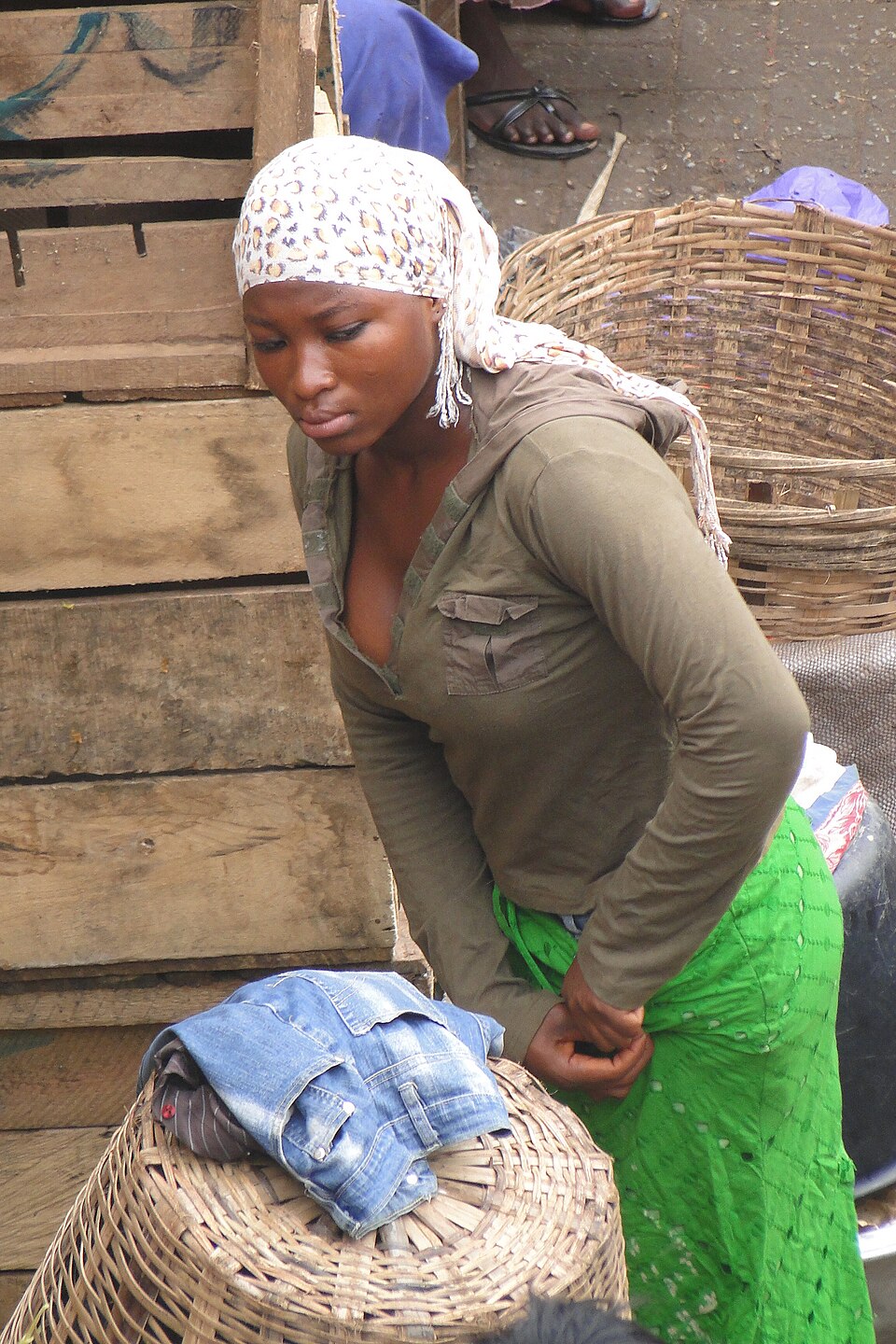
At six o'clock on any weekday morning, before the sun has cleared the rooftops of Adum, the commercial heart of Kumasi begins to pulse. Along Kejetia Road, women balance headloads of plantain, tomatoes, and smoked fish through a labyrinth of stalls that stretches, seemingly without end, in every direction. Porters — "kayayo" girls, many of them teenagers from the northern regions who have migrated south in search of work — weave through the crowds carrying loads that would stagger a draught animal. By mid-morning, the Kumasi Central Market, universally known as Kejetia, is a roaring ecosystem of approximately 50,000 daily visitors, 20,000 vendors, and more than 8,000 stores and stalls, making it the largest single market in West Africa and one of the largest open-air markets on the African continent.
The name "Kejetia" derives from a corruption of "catch ya" — a phrase reportedly used by lorry drivers at the transport terminal that once occupied the site, calling out to passengers: "Catch ya! Catch ya!" The lorry park and the market grew up together in the early 20th century, a symbiotic relationship between commerce and transport that defined Kumasi's economic geography. The market was formally established in 1924 by the British colonial administration, alongside Accra's Makola Market, as part of an effort to consolidate the scattered trading activities of Gold Coast towns into regulated, taxable spaces. But the site's commercial history reaches far deeper than the colonial period. Kumasi, founded in the 1680s by the Asante king Osei Tutu I, had been a major trading centre for centuries before the British arrived. The Asante Empire's wealth was built on the gold trade, and Kumasi sat at the crossroads of trade routes connecting the goldfields of the south to the savannah markets of the north, particularly Salaga and Kintampo.
The original Kejetia Market was a modest affair: open ground with a few sheds and tables, gradually colonised by traders who erected temporary structures of wood, corrugated iron, and tarpaulin. By the 1950s, as Kumasi's population swelled with post-independence urbanisation, the market had grown into an organic, unplanned commercial organism of extraordinary density. Traders organised themselves by commodity: the cloth sellers occupied one section, the yam sellers another, the "chop bars" (food stalls) clustered near the lorry park, and the gold and bead traders congregated in a warren of narrow alleyways where transactions worth thousands of cedis were conducted with a handshake.
About This Book
"The Kejetia Market: Commerce and Community in Kumasi" meticulously charts the evolution of this pivotal economic hub, revealing its interwoven threads of commerce, community, and cultural resilience. More than just a marketplace, Kejetia serves as a dynamic microcosm of Ghanaian society, particularly reflecting the power and agency of Asante women in trade. The book delves into Kejetia’s pre-colonial roots, tracing its lineage to historical Asante trade networks and the critical role of women as long-distance traders even before its formal establishment in 1924. It examines how the market, initially a smaller, more localized affair, expanded exponentially throughout the 20th century, driven by factors such as urbanization, population growth, and the increasing integration of Ghana into the global economy. A significant portion of the narrative focuses on the institution of the "Market Queen" ( *Ɔhemmaa Panyin* ), exploring the ways these women wield considerable economic and social influence, controlling supply chains, mediating disputes, and acting as advocates for the market's traders. The book details the complex power dynamics within the market, showcasing the intricate social structures and traditional governance systems that underpin its operations. Moreover, the book grapples with the challenges Kejetia has faced, including devastating fires that periodically ravaged the market, requiring rebuilding and adaptation. The recent US$507 million redevelopment project is critically examined, exploring its impact on traders, the displacement of some, and the delicate balance between modernization and preservation of the market's unique character. Readers will gain a nuanced understanding of the market's role as a repository of Ghanaian culture, observing the traditions, rituals, and social practices that persist amidst the bustle of commerce. The impact of global forces, such as imported textiles, is also analyzed, highlighting the ways in which Kejetia adapts to changing consumer preferences while retaining its local identity.
About the Author
While a single author is not provided, the scholarship on Ghanaian marketplaces, and specifically on Kejetia, is a rich and growing field. Scholars such as Gracia Clark, whose work focuses on Kumasi's markets and women traders, have significantly contributed to our understanding of these complex social and economic ecosystems. Anthropological studies, notably those drawing on feminist perspectives, have been instrumental in illuminating the agency and power of women in Ghanaian trade. Oral histories, carefully collected and preserved, form a critical foundation for much of this scholarship, as do archival records documenting the market's history and governance. The work builds on a tradition of documenting Ghanaian economic history from a social and cultural perspective, ensuring that the voices and experiences of market traders are central to the narrative.
Key Themes
- Women's Economic Power
- Asante Trade Networks
- Urbanization and Development
- Cultural Preservation
- Market Governance
- Economic Resilience
Why This Matters
The story of Kejetia Market is vital for understanding Ghanaian and African heritage because it encapsulates the resourcefulness, adaptability, and enduring traditions that have shaped the region’s economic and social landscape. It demonstrates the central role of markets in African societies -- not just as sites of exchange, but as crucibles of culture, community, and identity. For the diaspora, Kejetia offers a tangible connection to their ancestral homeland, revealing the dynamism of contemporary Ghana while echoing historical patterns of trade and exchange. Students, especially, should engage with this story to understand the complexities of development, the significance of informal economies, and the power of women in shaping African societies. Kejetia is a lesson in resilience, revealing how communities can adapt to change while preserving their cultural heritage.
Historical and Cultural Context
Understanding Kejetia requires situating it within broader African economic history. Pre-colonial trade networks, such as the Trans-Saharan trade, established long-distance exchange routes and fostered sophisticated systems of market organization. The rise of Asante as a powerful kingdom was inextricably linked to its control over trade routes and resources, including gold. Kejetia, therefore, represents a continuation of these traditions in a modern context. Furthermore, within the Sankofa Digital Heritage Library, Kejetia connects to themes of economic innovation, gender dynamics in African societies, and the ongoing negotiation between tradition and modernity in the postcolonial era.
Sources & References
- Mensah, I., Shi, Y., Boadi, E.A. 'Market infrastructure and trader livelihoods in Kumasi.' Journal of Urban Studies 59:4 (2022).
- Okoye, C. 'Public Markets and Urban Development in Kumasi, Ghana.' Cities Alliance Research Paper (2020).
- Clark, Gracia. Onions Are My Husband: Survival and Accumulation by West African Market Women. University of Chicago Press, 1994.
- Robertson, Claire. 'GA Women and Socioeconomic Change in Accra, Ghana.' In Women in Africa, edited by Nancy Hafkin and Edna Bay. Stanford University Press, 1976.
- McCaskie, T.C. State and Society in Pre-Colonial Asante. Cambridge University Press, 1995.
- Ghanaian Times. 'Africa's Largest Open-Air Single Market.' March 4, 2023.
- Cities Alliance. 'Public Markets in Ghana: The Case of Kumasi.' October 2024.
- Daily Graphic. Various reports on Kejetia Market fire outbreaks and redevelopment, 2015-2025.


