Keyboard shortcuts
- J: Next chapter
- K: Previous chapter
- T: Toggle table of contents
- Shift+S: Share book
- +: Increase font size
- -: Decrease font size
- Escape: Close modals

Cover: Own work CC BY-SA 3.0 via Wikimedia Commons
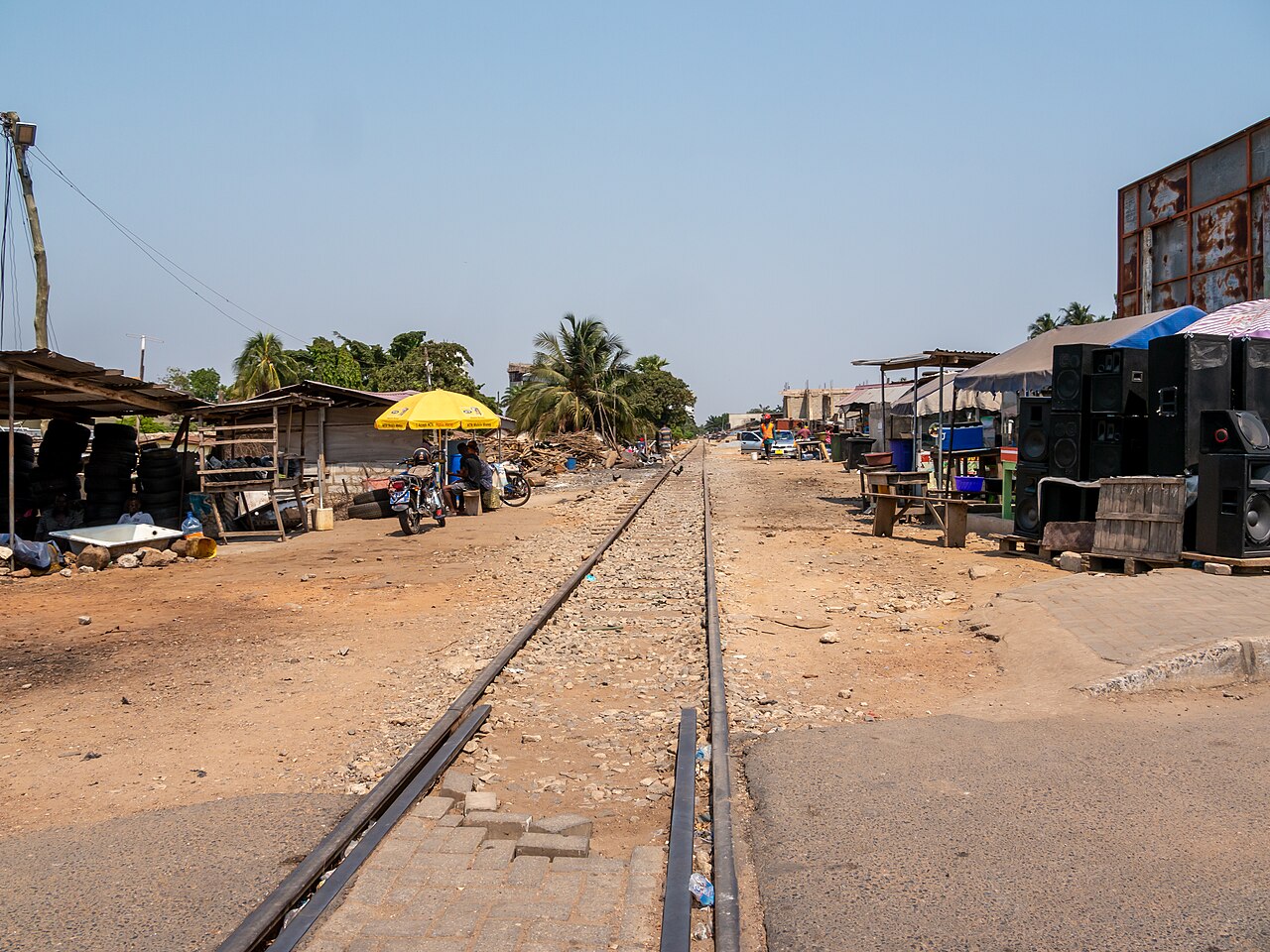
Rails to the Cocoa Frontier: Ghana's Railway History from Sekondi to Kumasi and Beyond
- railways
- infrastructure
- cocoa
- mining
- mobility
- labor
Chapter 1
Before the Iron Road
Before railway sleepers crossed the Gold Coast, movement depended on footpaths, river crossings, head porterage, canoe routes, pack animals in parts of the north, and coastal shipping. Markets such as Salaga, Kumasi, Cape Coast, Elmina, Keta, and Accra were linked by people who knew the landscape, seasons, tolls, languages, and risks. Goods moved, but slowly. Gold, kola, salt, cloth, dried fish, shea products, livestock, and later cocoa all relied on human carriers and caravan organization. Political power also moved along these routes. A chief who could control paths, ferries, markets, and safe passage controlled wealth as surely as one who controlled land.
British officials and merchants came to see transport as the great problem of colonial extraction. The forest zone held gold and timber. The interior held political power and expanding cocoa farms. The coast held ports, customs houses, and ships. Without a cheaper way to move heavy goods, mines struggled, cocoa expansion was expensive, and colonial armies found inland campaigns difficult. The railway was sold as progress, but its first logic was strategic and commercial. It would pull the interior toward the coast, lower transport costs, and make the colonial state more effective.
Ghanaians did not simply wait for technology to arrive. Carriers, traders, brokers, chiefs, and farmers already operated transport systems with their own rules. The railway entered this older world and disrupted it. It reduced some porterage work, created new wage jobs, shifted market towns, and made certain places suddenly important because a station appeared there. The iron road was modern, but it was not neutral.
About This Book
Ghana's railways began as colonial tools for moving gold, timber, cocoa, and officials, but they also changed towns, work, markets, migration, and the national imagination. This book follows the lines from Sekondi to Tarkwa, Kumasi, Accra, Tema, and beyond, asking why rail mattered and what its revival would require.
Key Themes
- railways
- infrastructure
- cocoa
- mining
- mobility
- labor
Why This Matters
Railway history explains how infrastructure shaped Ghana's economy, regional inequality, urban growth, labor politics, and development dreams from the Gold Coast to the Fourth Republic.
Historical and Cultural Context
Created during the 2026-07-14 Sankofa daily content sprint after duplicate checks against the existing catalogue.
Sources & References
- Ghana Railway Company historical materials
- Ghana Railway Development Authority public materials
- Ivor Agyeman-Duah, railway and development history essays
- Colonial Gold Coast annual reports and railway statistics