
Keyboard shortcuts
- J: Next chapter
- K: Previous chapter
- T: Toggle table of contents
- Shift+S: Share book
- +: Increase font size
- -: Decrease font size
- Escape: Close modals
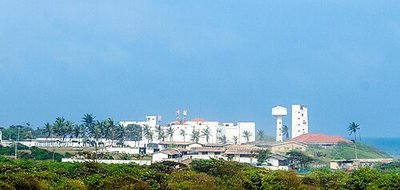
The Crucible of Conscience: The Christiansborg Crossroads Shooting of 1948 and the Dawn of Ghanaian Independence
- Independence Movement
- Gold Coast
- 1948 Riots
- Christiansborg Crossroads
- Ex-servicemen
- Colonialism
- Kwame Nkrumah
- Watson Commission
- Accra
- Ghana History
Chapter 1
The Unquiet Gold Coast: Post-War Discontent and the Seeds of Rebellion
By the close of World War II in 1945, some 65,000 Gold Coast men had served in the Royal West African Frontier Force, fighting in Burma, East Africa, and the Middle East. They returned to a colony in crisis. The British colonial government had promised these veterans pensions, gratuities, and employment upon demobilisation, but the reality was starkly different. Ex-servicemen found themselves jobless, their gratuities delayed or reduced, and the cost of living soaring. The colonial administration paid African soldiers far less than their British counterparts: a Gold Coast private received roughly one-tenth the pension of a British soldier of equivalent rank.
Meanwhile, the Association of West African Merchants (AWAM), a cartel of European trading firms including the United Africa Company (a Unilever subsidiary), Cadbury, and the Compagnie Française de l'Afrique Occidentale (CFAO), controlled the import trade and kept prices artificially high. By January 1948, the Ga chief Nii Kwabena Bonne III, born Theodore Taylor (1888 to 1968), organised a nationwide boycott of European goods. The boycott galvanised ordinary Gold Coasters and exposed the depth of popular anger at colonial economic exploitation. Governor Sir Gerald Creasy, whom Accra residents mockingly called "Crazy Creasy," proved unable to address the underlying grievances.
The United Gold Coast Convention (UGCC), founded on 4 August 1947 at the home of George Alfred "Paa" Grant in Sekondi, had appointed Kwame Nkrumah as its General Secretary in December 1947. The party provided the political framework, but the ex-servicemen provided the spark. By late February 1948, the Gold Coast was a powder keg waiting for a match.
About This Book
"The Crucible of Conscience" meticulously examines the confluence of socio-economic and political factors that culminated in the Christiansborg Crossroads Shooting, a turning point in Ghana's independence struggle. The book delves into the post-World War II disillusionment of Gold Coast ex-servicemen, many of whom faced unemployment and neglect despite their service to the British Empire. It highlights the economic hardships faced by ordinary Ghanaians, exacerbated by wartime inflation, price controls perceived as unjust, and limited opportunities for advancement under colonial rule. The United Africa Company (UAC), a major player in the Gold Coast economy, is examined for its role in shaping trade and contributing to the prevailing economic discontent. The narrative vividly recreates the events of February 28, 1948, detailing the march of unarmed ex-servicemen towards Christiansborg Castle to present a petition to the Governor. It explores the controversial decision to open fire on the marchers, resulting in the deaths of Sergeant Adjetey, Corporal Attipoe, and Private Odartey Lamptey -- their names now etched in Ghanaian history. The book critically analyzes the subsequent Watson Commission of Enquiry, its findings, and its impact on the political landscape. Furthermore, the book explores the arrest and detention of the "Big Six" -- Kwame Nkrumah, Ebenezer Ako-Adjei, Edward Akufo-Addo, J.B. Danquah, Emmanuel Obetsebi-Lamptey, and William Ofori Atta -- leaders of the United Gold Coast Convention (UGCC). It investigates the ramifications of their imprisonment, which inadvertently galvanized popular support for the independence movement and thrust Nkrumah into a position of unparalleled leadership. Finally, "The Crucible of Conscience" charts the rapid acceleration of the independence movement in the aftermath of the shooting, culminating in Ghana's independence in 1957. Readers will gain a comprehensive understanding of the socio-economic grievances, political machinations, and individual sacrifices that shaped this critical juncture in Ghanaian history.
About the Author
The study of the Christiansborg Crossroads Shooting and its significance in Ghana's independence struggle has been shaped by generations of Ghanaian historians and scholars. Early accounts were often rooted in oral traditions and eyewitness testimonies, preserving the lived experiences of those directly affected. Works by historians such as F. Agbodeka and Dennis Austin provided foundational analyses of the political landscape and the rise of nationalism. More recent scholarship, exemplified by Richard Rathbone's work on colonial Ghana, delves deeper into the socio-economic factors that fueled discontent. The voices of participants and witnesses, as documented in archival materials and oral history projects, continue to enrich our understanding of this pivotal event. This book synthesizes these diverse perspectives, drawing upon both established scholarship and emerging research to offer a nuanced and comprehensive account of the events of 1948 and their enduring legacy.
Key Themes
- Colonial violence
- Economic exploitation
- Nationalism
- Post-war disillusionment
- Political awakening
- The role of ex-servicemen
Why This Matters
The Christiansborg Crossroads Shooting is a watershed moment in Ghanaian and African history, marking a shift from passive resistance to active demands for self-governance. It underscores the brutality of colonial rule and the lengths to which imperial powers would go to maintain control. Understanding this event is crucial for appreciating the sacrifices made by ordinary Ghanaians in the pursuit of independence and for comprehending the complexities of post-colonial nation-building.
For the diaspora, this story offers a powerful connection to their ancestral homeland and a deeper understanding of the struggles that paved the way for Ghana's independence. For students, it provides a compelling case study of resistance, resilience, and the transformative power of collective action. By engaging with this history, readers can gain valuable insights into the enduring legacies of colonialism and the ongoing quest for social and economic justice in Africa and beyond. This moment emphasizes the need to critically examine power structures and advocate for equity and self-determination.
Historical and Cultural Context
The Christiansborg Crossroads Shooting must be understood within the broader context of anti-colonial movements across Africa and the global landscape of post-World War II decolonization. The Atlantic Charter, signed by the Allied powers in 1941, proclaimed the right of all peoples to self-determination, fueling aspirations for independence in colonized territories. Events like the Mau Mau uprising in Kenya and the Algerian War of Independence further illustrate the widespread resistance to colonial rule during this period. Within the Sankofa Library, this book complements other works exploring the rise of Pan-Africanism, the struggle for liberation in Southern Africa, and the challenges of building independent nations in the post-colonial era.
Sources & References
- Austin, Dennis. Politics in Ghana, 1946-1960. Oxford University Press, 1964.
- Nkrumah, Kwame. Ghana: The Autobiography of Kwame Nkrumah. Panaf Books, 1957 (reprinted 1973).
- Report of the Commission of Enquiry into Disturbances in the Gold Coast, 1948 (Watson Commission Report). Colonial No. 231. H.M. Stationery Office, 1948.
- Rooney, David. Kwame Nkrumah: The Political Kingdom in the Third World. St. Martin's Press, 1988.
- Boahen, A. Adu. Ghana: Evolution and Change in the Nineteenth and Twentieth Centuries. Longman, 1975.


'/%3E%3Crect width='900' height='1200' fill='url(%23p)' opacity='.7'/%3E%3Ctext x='450' y='560' text-anchor='middle' font-size='140' font-family='serif'%3E%E2%9C%8A%3C/text%3E%3Ctext x='450' y='680' text-anchor='middle' fill='%23fff3c4' font-size='54' font-family='Georgia,serif' font-weight='700'%3ESankofa Library%3C/text%3E%3Ctext x='450' y='745' text-anchor='middle' fill='%23fff3c4' fill-opacity='.8' font-size='30' font-family='Arial,sans-serif'%3ECover under review%3C/text%3E%3C/svg%3E)