
Keyboard shortcuts
- J: Next chapter
- K: Previous chapter
- T: Toggle table of contents
- Shift+S: Share book
- +: Increase font size
- -: Decrease font size
- Escape: Close modals
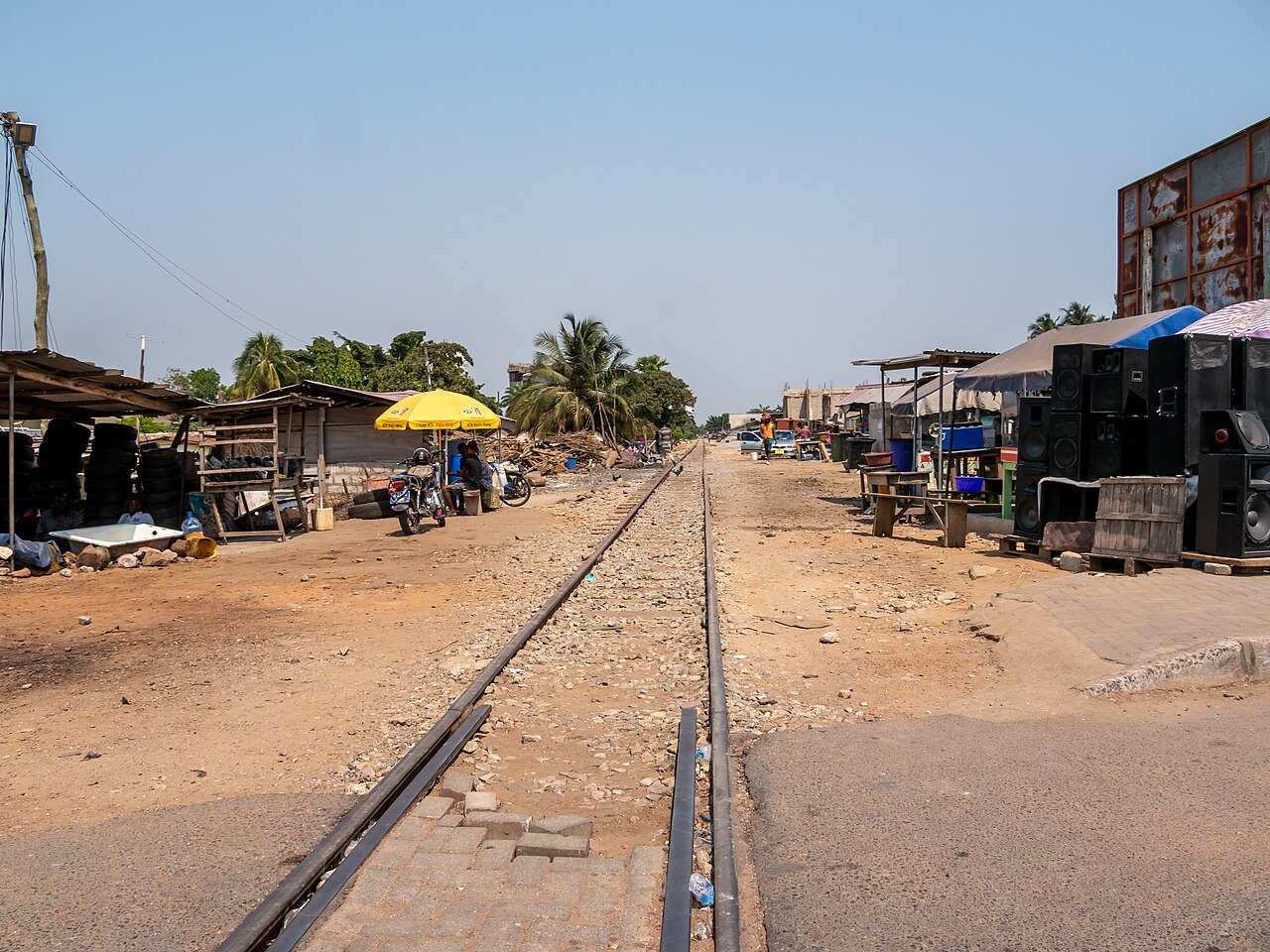
Cover: Own work CC BY-SA via Wikimedia Commons
Tracks of Trade and Nationhood: Ghana's Railway History from the Gold Coast to the Republic
↓Chapter 1
Part 1
## Steel Lines for Empire: The Colonial Origins of Rail in the Gold Coast
Railways arrived in the Gold Coast as instruments of colonial extraction rather than as neutral gifts of modernization. In the final years of the nineteenth century, British officials and mining interests wanted a more reliable way to move gold, timber, machinery, and personnel between the coast and the mineral-rich interior. Head-loading and caravan transport were slow and expensive, while roads became impassable in the rainy season. The answer, from the colonial point of view, was rail. In 1898 construction began on the Sekondi-Tarkwa line, the first major railway in the colony. Sekondi was chosen because it had become an important coastal outlet for trade, and Tarkwa sat in the heart of a fast-growing mining zone.
The line reached Tarkwa in 1901 and soon proved how tightly rail was tied to colonial commercial priorities. It cut transport costs for mining companies, accelerated exports, and strengthened British administrative reach into the interior. Expansion followed. The Western Line pushed onward toward Kumasi, the political heart of Asante, reaching the city in 1903 after the British defeat and annexation of the Asante kingdom. That timing was not accidental. Railways were part of the infrastructure of conquest. Once British power had subdued military resistance, steel tracks helped consolidate that power by making troop movement, taxation, and commodity extraction more efficient.
The line also transformed geography. Towns along the route gained new significance as stations, depots, and labor points. Sekondi itself grew as a port-linked rail town. Tarkwa became more deeply integrated into imperial mining networks. Communities previously connected mainly by regional trade paths now found themselves inserted into a colonial corridor structured around export value. The railway did not simply move goods across existing space. It reorganized space to favor imperial commerce.
British records framed railway construction as progress, but the benefits were uneven from the beginning. The first network served mines and export agriculture before it served Ghanaian mobility on Ghanaian terms. Passenger traffic existed, but it was secondary to the movement of wealth toward the coast. That imbalance would haunt railway policy for the next century. Even when later governments tried to nationalize and repurpose the system, they inherited lines designed first for extraction.
## From Cocoa to Kumasi: Expansion and the Making of a Colonial Economy
Key Themes
- history
- infrastructure
- ghana


'/%3E%3Crect width='900' height='1200' fill='url(%23p)' opacity='.7'/%3E%3Ctext x='450' y='560' text-anchor='middle' font-size='140' font-family='serif'%3E%E2%AD%90%3C/text%3E%3Ctext x='450' y='680' text-anchor='middle' fill='%23fff3c4' font-size='54' font-family='Georgia,serif' font-weight='700'%3ESankofa Library%3C/text%3E%3Ctext x='450' y='745' text-anchor='middle' fill='%23fff3c4' fill-opacity='.8' font-size='30' font-family='Arial,sans-serif'%3ECover under review%3C/text%3E%3C/svg%3E)