
Keyboard shortcuts
- J: Next chapter
- K: Previous chapter
- T: Toggle table of contents
- Shift+S: Share book
- +: Increase font size
- -: Decrease font size
- Escape: Close modals

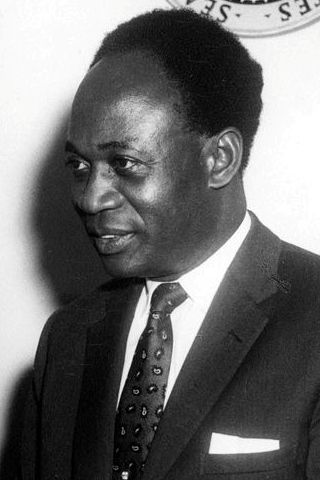
Cover: Time Magazine Public domain via Wikimedia Commons
Counting the Colony: The 1951 Gold Coast Election and the Road to Self-Government
- 1951 election
- Gold Coast
- self-government
- CPP
- Kwame Nkrumah
- Legislative Assembly
- decolonization
Chapter 1
A Colony After the 1948 Shock
The election of February 1951 cannot be understood without the crisis that shook the Gold Coast three years earlier. On 28 February 1948, ex-servicemen marching to Christiansborg Castle were fired upon, and Accra erupted into protest. The Watson Commission investigated the disturbances and concluded that the old machinery of indirect rule and limited African representation could no longer contain urban workers, educated professionals, market women, farmers, and veterans who expected political change after the Second World War. The colonial government then appointed the Coussey Committee, chaired by Justice James Henley Coussey, to recommend constitutional reforms. Its report proposed a much larger Legislative Assembly and a more Africanized executive, but it still kept real power in British hands. For cautious nationalists, the plan looked like a step forward. For Kwame Nkrumah and younger militants, it looked too slow. The United Gold Coast Convention had helped open the constitutional question, but its elite style did not match the impatience of the streets. Out of this gap came the Convention People’s Party, founded in June 1949 with the slogan of self-government now. By 1950, Positive Action strikes and boycotts had placed Nkrumah in prison and forced colonial officials to test whether popular anger could be redirected into ballots. The 1951 election was therefore not simply an administrative event. It was a controlled experiment in decolonization, staged by a worried colonial state and seized by a movement that understood the crowd, the newspaper, the lorry park, the market, and the polling station as parts of one struggle.
About This Book
This book follows the constitutional reforms, party organization, popular campaigning, and political consequences of the February 1951 Gold Coast election. It explains how the Coussey Committee settlement, the Convention People’s Party, regional political networks, women traders, workers, ex-servicemen, newspapers, chiefs, and colonial administrators all shaped a decisive moment in Ghana’s democratic history.
Key Themes
- democracy
- independence
- constitutional reform
- mass politics
- colonial administration
Why This Matters
The 1951 election made electoral politics the central road to Gold Coast independence and demonstrated that mass organization could defeat cautious colonial constitutionalism.
Historical and Cultural Context
Connects to books on the Big Six, Positive Action, the 1948 disturbances, Nkrumah, and Ghana’s independence movement, but focuses specifically on the mechanics and meaning of the 1951 vote.
Sources & References
- David Apter, Ghana in Transition
- Dennis Austin, Politics in Ghana 1946-1960
- Kwame Nkrumah, Ghana: The Autobiography of Kwame Nkrumah
- Report of the Coussey Committee, 1949
- Gold Coast Legislative Assembly election records, 1951

'/%3E%3Crect width='900' height='1200' fill='url(%23p)' opacity='.7'/%3E%3Ctext x='450' y='560' text-anchor='middle' font-size='140' font-family='serif'%3E%E2%9C%8A%3C/text%3E%3Ctext x='450' y='680' text-anchor='middle' fill='%23fff3c4' font-size='54' font-family='Georgia,serif' font-weight='700'%3ESankofa Library%3C/text%3E%3Ctext x='450' y='745' text-anchor='middle' fill='%23fff3c4' fill-opacity='.8' font-size='30' font-family='Arial,sans-serif'%3ECover under review%3C/text%3E%3C/svg%3E)
