Keyboard shortcuts
- J: Next chapter
- K: Previous chapter
- T: Toggle table of contents
- Shift+S: Share book
- +: Increase font size
- -: Decrease font size
- Escape: Close modals
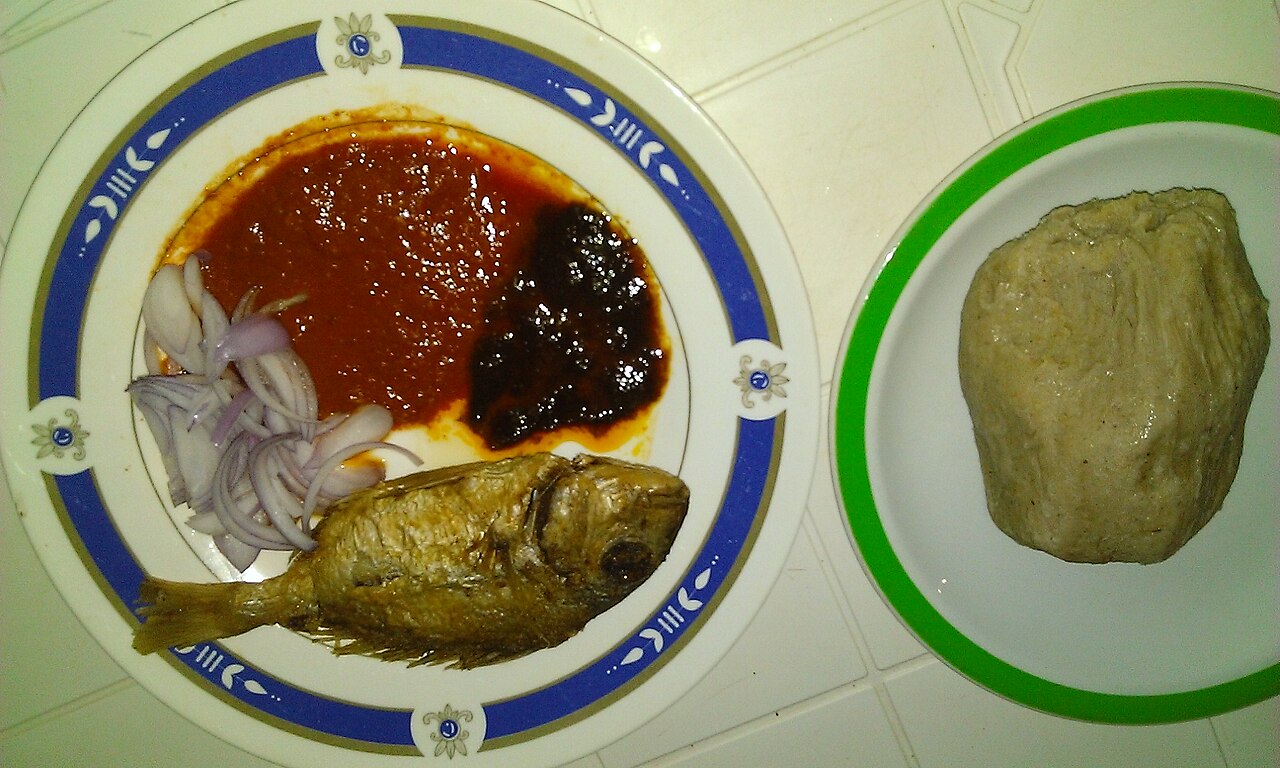
Cover: Own work CC BY-SA 4.0 via Wikimedia Commons
Echoes of the Sea and Soil: The Ga People, Homowo, and the Resilience of Pre-Colonial Traditions
- Ga people
- Homowo festival
- Accra
- Ga Mashie
- Kpele worship
- Traditional Religion
- Migrations
- Famine
- Pre-Colonial Ghana
- Coastal Communities
Chapter 1
The Migratory Path to Ga Mashie: Forging a Coastal Identity
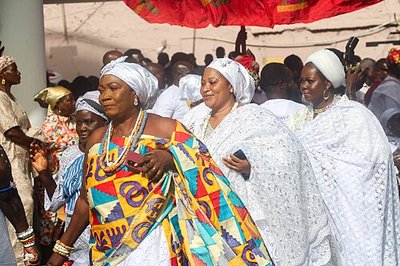
The narrative of the Ga people begins not on the shores of present-day Ghana, but across vast distances, tracing a migratory path that speaks volumes about their resilience and determination. Oral traditions and historical accounts suggest a complex origin, with early Ga groups moving from areas in modern-day Nigeria and Benin, possibly linked to the Yoruba and Edo peoples, before settling along the Volta River basin. This initial movement, which likely spanned the 15th and early 16th centuries, brought them into contact with various indigenous groups, including the Guan, who were already established in parts of the Gold Coast hinterland. It was through a series of tactical alliances, cultural exchanges, and occasional conflicts that the Ga gradually asserted their presence, absorbing some populations while maintaining their distinct cultural identity.
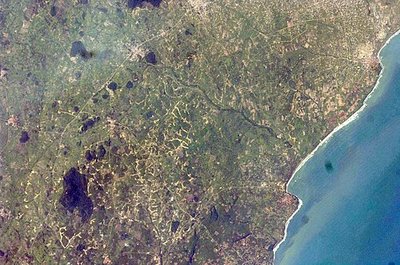
By the late 16th century, the Ga had established a chain of vibrant city-states along the Gulf of Guinea, extending from the vicinity of present-day Tema to Accra. Key settlements like Ga Mashie (the core of modern Accra), La, Osu, Nungua, and Teshie emerged as significant political and economic entities. These coastal enclaves became vital hubs for trade, particularly with European powers who began arriving in increasing numbers from the 17th century onwards, seeking gold, slaves, and other commodities. The Ga, with their strategic coastal positions and sophisticated maritime skills, quickly became adept intermediaries, developing complex systems of governance under their Mantsemei (chiefs) and Wulomei (priests) to manage both internal affairs and external relations.
The establishment of these settlements was a testament to the Ga's ability to adapt and thrive in a new environment. They brought with them rich traditions of political organization, spiritual reverence, and agricultural practices, which they skillfully integrated with the resources and knowledge of their new homeland. The name 'Ga Mashie' itself, often translated as 'Ga proper' or 'Ga heartland,' signifies the centrality of Accra in their historical and cultural consciousness. This period of settlement was not without its challenges, including the constant threat of famine, which would profoundly shape their cultural practices and give birth to their most revered festival, Homowo, a collective memory etched into the very fabric of their being.
Sources & References
- Reindorf, Carl Christian. History of the Gold Coast and Asante. Basel: Basel Mission Book Depot, 1895.
- Field, M.J. Social Organisation of the Ga People. London: Crown Agents for the Colonies, 1940.
- Parker, John. Making the Town: Ga State and Society in Early Colonial Accra. Portsmouth, NH: Heinemann, 2000.
- Azumah, Edward. The Ga State: A Study of the Ga People and Their Institutions. Accra: Ghana Universities Press, 2004.
- Agyekum, Kofi. 'The Ga Homowo Festival: A Cultural Heritage of the Ga People.' Journal of Ghanaian Culture, Vol. 1, No. 1 (2010): 45-62.