Keyboard shortcuts
- J: Next chapter
- K: Previous chapter
- T: Toggle table of contents
- Shift+S: Share book
- +: Increase font size
- -: Decrease font size
- Escape: Close modals
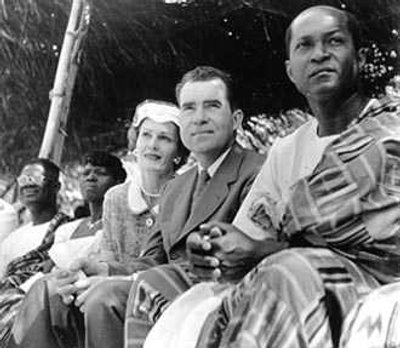
Ghana's Road to Independence: From Gold Coast to Freedom
- Gold Coast
- Kwame Nkrumah
- Convention People's Party (CPP)
- United Gold Coast Convention (UGCC)
- Accra Riots 1948
- Positive Action
- Colonialism
- Pan-Africanism
- Aborigines' Rights Protection Society (ARPS)
- Decolonization
Chapter 1
The Genesis of Empire: British Rule and Early Resistance (1874-1930s)
The formal declaration of the Gold Coast as a British Crown Colony in 1874 marked a pivotal moment in the region's history, irrevocably altering its political, economic, and social landscape. This was not a sudden imposition but the culmination of centuries of European presence, particularly British commercial and political influence along the coast. Driven by economic imperatives – the insatiable demand for raw materials like gold, palm oil, and later cocoa – and geopolitical competition during the "Scramble for Africa," Britain sought to consolidate its control, transforming a loose collection of protectorates and trading posts into a formal colonial administration. This period, from 1874 to the 1930s, witnessed the establishment of the colonial state, profound socio-economic changes, and the emergence of diverse forms of resistance that would lay the groundwork for eventual independence.
Consolidation of Power and Administrative Structures
The British colonial state was built on a foundation of administrative control and economic exploitation. A Governor, appointed by the Crown, headed the administration, supported by a Legislative Council which initially comprised solely British officials but gradually included a token number of appointed Africans. The administrative machinery was designed to facilitate resource extraction and maintain order. "Indirect Rule," a system famously championed by Lord Lugard elsewhere in Africa, was adapted for the Gold Coast, particularly in the northern territories and, to a degree, in Ashanti after its conquest. This involved governing through existing traditional rulers, often transforming them into "warrant chiefs" whose authority derived from the colonial power rather than their people, leading to significant tensions and challenges to legitimacy within indigenous communities. The Native Administration Ordinance of 1927 further formalized this system, granting chiefs limited powers under colonial oversight.
Infrastructure development was paramount to the colonial economic agenda. The construction of railways, such as the line from Sekondi to Tarkwa (completed 1901) and later extending to Kumasi (1903) and Accra, was primarily designed to facilitate the export of gold from the mines and, increasingly, cocoa from the burgeoning farms. The deep-water harbour at Takoradi, completed in 1928, further solidified the export-oriented economy, making it a vital conduit for colonial trade. Land policies were particularly contentious. The Public Lands Ordinance of 1897 and the subsequent Forest Ordinance of 1911 sought to declare vast tracts of "unoccupied" land as Crown land, sparking widespread alarm among the indigenous population who held land communally under customary law, viewing it as an affront to their sovereignty and livelihood.
Early Resistance: Armed Struggle and Political Agitation
Resistance to British encroachment was multifaceted, manifesting as fierce armed struggle, sophisticated political agitation, and cultural preservation. The Gold Coast's history of resistance is rich and varied.
Ashanti Resistance: The powerful Asante Empire, with its centralized structure, formidable military, and rich cultural heritage, posed the most significant challenge to British dominance. Following earlier conflicts, the British launched a major offensive in 1874 under Sir Garnet Wolseley, culminating in the burning of Kumasi and the signing of the Treaty of Fomena. Despite this, Asante independence persisted until 1896, when a 'punitive expedition' led to the exile of Asantehene Prempeh I (Nana Agyeman Prempeh I) to the Seychelles. The final, and arguably most iconic, armed resistance came in 1900-1901 with the War of the Golden Stool. This war erupted when the British Governor, Sir Frederick Hodgson, during a visit to Kumasi, demanded to sit on the Golden Stool, the sacred symbol of Asante nationhood, sovereignty, and the soul of the Asante people. This demand was a grave insult, interpreted as an attempt to seize their very essence. Led by Yaa Asantewaa, the Queen Mother of Ejisu, the Asante chiefs rallied, famously inspired by Yaa Asantewaa's declaration: "If you, the men of Ashanti, are going to be cowards and not fight, we the women will." The war was fierce, lasting over a year, but ultimately the British, with superior firepower and reinforcements, prevailed. Yaa Asantewaa was captured and exiled to the Seychelles, and Ashanti was formally annexed as a Crown Colony in 1901.
Southern Political Resistance: In the coastal Fante and Ga areas, where Western education had a longer history due to missionary presence, resistance often took a political and legal form. The Aborigines' Rights Protection Society (ARPS), founded in Cape Coast in 1897, emerged as the leading voice against colonial land policies. Key figures included John Mensah Sarbah, a distinguished barrister and legislator; Joseph Peter Brown, a prominent merchant; and George Ekem Ferguson, a surveyor who had earlier helped delineate colonial boundaries. The ARPS successfully mobilized public opinion, sending a delegation to London in 1898 to petition the Colonial Office against the Public Lands Bill. Their efforts, coupled with the legal acumen of Sarbah, led to the withdrawal of the bill, a significant victory that demonstrated the power of organized, educated resistance. The ARPS also championed issues of traditional authority, education, and economic development, laying the intellectual groundwork for later nationalist movements. While the Fante Confederacy (1868-1871) predates formal annexation, it represents an earlier, albeit ultimately unsuccessful, attempt by coastal states to establish a unified, self-governing entity in response to European and Asante pressures, demonstrating a long tradition of indigenous political innovation.
Northern Territories: The Northern Territories, declared a British Protectorate in 1901, experienced a different form of conquest. Lacking the centralized states of Asante or the educated elite of the coast, resistance was often localized and fragmented. The British gradually pacified the region, establishing administrative posts and utilizing indigenous leaders as intermediaries. The primary British interest here was often as a source of labor for the mines and cocoa farms to the south, leading to policies that encouraged migration.
Economic and Social Transformation
The colonial period dramatically reoriented the Gold Coast economy. The most significant development was the rise of cocoa as the dominant cash crop. Introduced by Tetteh Quarshie in 1879 from Fernando Po, cocoa cultivation spread rapidly, driven primarily by Ghanaian peasant farmers. By the 1920s, the Gold Coast was the world's leading producer, transforming the economic landscape and creating a class of prosperous African farmers and traders. This "peasant miracle" was largely an indigenous initiative, demonstrating Ghanaian entrepreneurial spirit within the colonial framework. Urban centers like Accra, Cape Coast, and Kumasi grew, attracting migrants and becoming hubs of commerce and administration. Education, primarily delivered through missionary societies with government subsidies, expanded, creating an educated African elite who would later challenge colonial rule. However, access to quality healthcare and education remained limited for the majority of the population, often concentrated in urban areas.
Broader Context and World Connections
The Gold Coast's experience was inextricably linked to broader global phenomena. The "Scramble for Africa" saw European powers carve up the continent, with the Berlin Conference of 1884-85 legitimizing these claims. World War I (1914-1918) had a profound impact; thousands of Gold Coasters served in the West African Frontier Force, fighting for the British Empire in German Togoland and East Africa. This exposure to the wider world, and the experience of fighting alongside and for their colonial masters, fostered a sense of shared identity and grievance, and often led to disillusionment upon their return, fueling early anti-colonial sentiments. Ideas of Pan-Africanism, championed by figures like W.E.B. Du Bois and Marcus Garvey, began to resonate with the educated elite, connecting local struggles for rights with a broader vision of African liberation. The National Congress of British West Africa (NCBWA), founded in Accra in 1920 by J.E. Casely Hayford, was a direct manifestation of this transnational consciousness, advocating for greater African representation in legislative councils and self-determination for all British West African colonies.
By the 1930s, the British colonial state in the Gold Coast was firmly entrenched. Yet, this period was not one of passive acceptance. From the fierce armed resistance of the Asante to the sophisticated political and legal challenges mounted by the ARPS, Ghanaians consistently asserted their agency and sovereignty. The economic transformations, particularly the rise of cocoa, created new social classes and opportunities but also new dependencies. The seeds of nationalism were sown, nurtured by the indignities of colonial rule, the aspirations of an educated elite, and a deep-seated desire for self-determination rooted in centuries of independent statecraft. The foundations for Ghana's eventual road to independence were firmly laid during these formative decades of empire and early resistance.
About This Book
"Ghana's Road to Independence: From Gold Coast to Freedom" meticulously charts the decades-long struggle for self-determination in the Gold Coast, leading to Ghana's landmark independence in 1957. The book begins by detailing the formal annexation of the coastal regions as the Gold Coast Colony in 1874, following the defeat of the Asante Kingdom. This marked the beginning of intensified British administration, impacting traditional chieftaincy, land ownership, and economic activities. The narrative progresses through various forms of resistance, from early intellectual critiques by figures like John Mensah Sarbah, whose legal scholarship challenged colonial land policies, to the emergence of nationalist movements. The book highlights the role of organizations like the Aborigines' Rights Protection Society (ARPS), formed in the late 19th century to safeguard indigenous land rights and traditional institutions against colonial encroachment. It examines the impact of World War I and World War II, which exposed Gold Coast soldiers to new ideas and fueled anti-colonial sentiments. The interwar period saw the rise of educated elites and the formation of political organizations advocating for greater African representation in government. A central focus is on the United Gold Coast Convention (UGCC), formed in 1947, and the pivotal role of Kwame Nkrumah, who later broke away to form the Convention People's Party (CPP). The book analyzes Nkrumah's charismatic leadership, his strategy of "Positive Action," and the CPP's mass mobilization techniques that resonated with the working class and rural populations. It delves into the complexities of the 1948 riots, the Coussey Committee, and the subsequent constitutional reforms that gradually transferred power to Africans. The narrative culminates in the 1956 elections, the CPP's victory, and Ghana's declaration of independence on March 6, 1957, marking a watershed moment for the entire African continent and the global anti-colonial movement. Readers will gain a comprehensive understanding of the key players, turning points, and socio-economic factors that shaped Ghana's path to freedom.
About the Author
The history of Ghana's independence has been documented by a diverse range of scholars, both Ghanaian and international. Early accounts often relied on colonial records and perspectives. However, post-independence, Ghanaian historians like Adu Boahen, F. Agbodeka, and Kwame Arhin challenged these narratives, offering interpretations grounded in indigenous perspectives and oral traditions. These historians drew upon Asante court records, Ga narratives, and other local sources to provide a more nuanced understanding of pre-colonial societies and their responses to colonial rule. Contemporary scholars continue to build upon this foundation, utilizing interdisciplinary approaches and exploring themes of gender, class, and memory in the independence struggle. The historiography of Ghana's independence reflects an ongoing process of re-evaluation and reinterpretation.
Key Themes
- Colonial resistance
- Nationalism
- Pan-Africanism
- Economic exploitation
- Political mobilization
- Chieftaincy and tradition
- Constitutional reforms
Why This Matters
Ghana's independence holds immense significance for understanding both Ghanaian and African heritage. It represents the culmination of decades of struggle against colonial rule and served as a beacon of hope for other African nations seeking self-determination. Ghana became a symbol of Pan-Africanism, inspiring liberation movements across the continent and beyond.
Understanding this history is crucial for the diaspora as it provides insights into the struggles and triumphs of their ancestors and the roots of their cultural identity. For students, Ghana's story offers a valuable case study in decolonization, nation-building, and the complexities of political and social change. It highlights the importance of resistance, the power of collective action, and the enduring legacy of colonialism. Engaging with this story fosters a deeper appreciation of Ghanaian culture, its contributions to global history, and the ongoing challenges of development and social justice.
Historical and Cultural Context
Ghana's independence was deeply intertwined with the broader Pan-African movement, particularly the vision of a unified and liberated Africa. Kwame Nkrumah's leadership in Ghana and his commitment to Pan-Africanism made Accra a hub for liberation movements from across the continent. The All-African People's Conference, held in Accra in 1958, further solidified Ghana's role as a champion of African liberation. Within the Sankofa Library, this book on Ghana's independence connects to materials on Pan-Africanism, the history of colonialism in Africa, and biographies of key figures in the independence movements.
Sources & References
- Nkrumah, Kwame. Ghana: The Autobiography of Kwame Nkrumah. Panaf Books, 1957.
- Padmore, George. The Gold Coast Revolution: The Struggle of an African People from Slavery to Freedom. Dennis Dobson, 1953.
- Report of the Commission of Enquiry into Disturbances in the Gold Coast (Watson Commission Report). Colonial Office, 1948.
- Apter, David E. Ghana in Transition. Princeton University Press, 1955.
- Boahen, A. Adu. Ghana: Evolution and Change in the Nineteenth and Twentieth Centuries. Longman, 1975.