
Keyboard shortcuts
- J: Next chapter
- K: Previous chapter
- T: Toggle table of contents
- Shift+S: Share book
- +: Increase font size
- -: Decrease font size
- Escape: Close modals
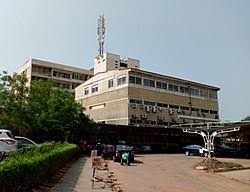
Cover: Own work CC BY-SA 4.0 via Wikimedia Commons
Korle Bu and the Healing Republic: Medical Training, Public Health, and Ghana's Hospital History
↓Chapter 1
A Hospital on the Lagoon: Colonial Origins, 1923-1957
Korle Bu Teaching Hospital began in 1923, when the Gold Coast colonial administration opened a new hospital on the Korle Lagoon side of Accra. Its Ga name is often translated as the valley or area of Korle, tying the institution to the geography and memory of the city rather than to a faceless bureaucracy. The hospital was built partly because Accra's older medical facilities could not meet the needs of a growing colonial capital shaped by trade, migration, epidemics, and urban crowding.
Colonial medicine in the Gold Coast was unequal. European officials, soldiers, merchants, and missionaries often received priority, while African patients encountered underfunded services and racial assumptions about disease and hygiene. Yet African communities were never passive. Families combined hospital treatment with herbal medicine, prayer, kinship care, and local knowledge. Nurses, dispensers, orderlies, midwives, and interpreters became crucial bridges between biomedical practice and everyday Ghanaian life.
Korle Bu's early decades unfolded during a period of public health struggle. Malaria, yaws, tuberculosis, smallpox, maternal mortality, infant disease, and sanitation problems challenged the colonial state. Accra's expansion brought pressure on water, housing, drainage, and waste systems. Hospitals could treat patients, but public health required streets, wells, latrines, vaccination campaigns, education, and trust. The hospital therefore sat at the meeting point of clinical care and urban policy.
By the 1940s and 1950s, the Gold Coast was moving toward self-government. The 1948 disturbances, the rise of mass nationalism, and the expansion of education changed expectations. Citizens wanted institutions that served the public as a right, not as colonial charity. Korle Bu entered independence already carrying this tension: it was a colonial creation that Ghanaians would claim, expand, criticize, and transform into a national medical landmark.
About This Book
Founded in 1923, Korle Bu grew from a colonial hospital outside central Accra into Ghana's most important teaching hospital and a symbol of national medical ambition. This book traces its origins, the creation of the University of Ghana Medical School in 1962, the training of doctors and nurses, specialist departments, public health crises, and the pressures of serving a growing republic.
About the Author
Sankofa Library research team
Key Themes
- health history
- education
- public institutions
- Accra
- science
Why This Matters
Korle Bu is more than a hospital. It is a national institution where Ghana's debates about equity, expertise, public funding, brain drain, medical ethics, and hope are lived every day.
Historical and Cultural Context
Created during the 2026-04-28 Sankofa content sprint after duplicate-topic audit.


'/%3E%3Crect width='900' height='1200' fill='url(%23p)' opacity='.7'/%3E%3Ctext x='450' y='560' text-anchor='middle' font-size='140' font-family='serif'%3E%E2%AD%90%3C/text%3E%3Ctext x='450' y='680' text-anchor='middle' fill='%23fff3c4' font-size='54' font-family='Georgia,serif' font-weight='700'%3ESankofa Library%3C/text%3E%3Ctext x='450' y='745' text-anchor='middle' fill='%23fff3c4' fill-opacity='.8' font-size='30' font-family='Arial,sans-serif'%3ECover under review%3C/text%3E%3C/svg%3E)