Keyboard shortcuts
- J: Next chapter
- K: Previous chapter
- T: Toggle table of contents
- Shift+S: Share book
- +: Increase font size
- -: Decrease font size
- Escape: Close modals
Rhythms of Freedom: The Rise of Highlife Music and Ghana's Golden Age of Sound
- Highlife
- E.T. Mensah
- E.K. Nyame
- Osibisa
- Nana Kwame Ampadu
- Hiplife
- Reggie Rockstone
- Palm Wine Music
- Ghana Music
- Tempos Band
- Independence
- Cultural Heritage
Chapter 1
The Guitar Band Revolution: Concert Parties, Social Commentary, and the People's Music
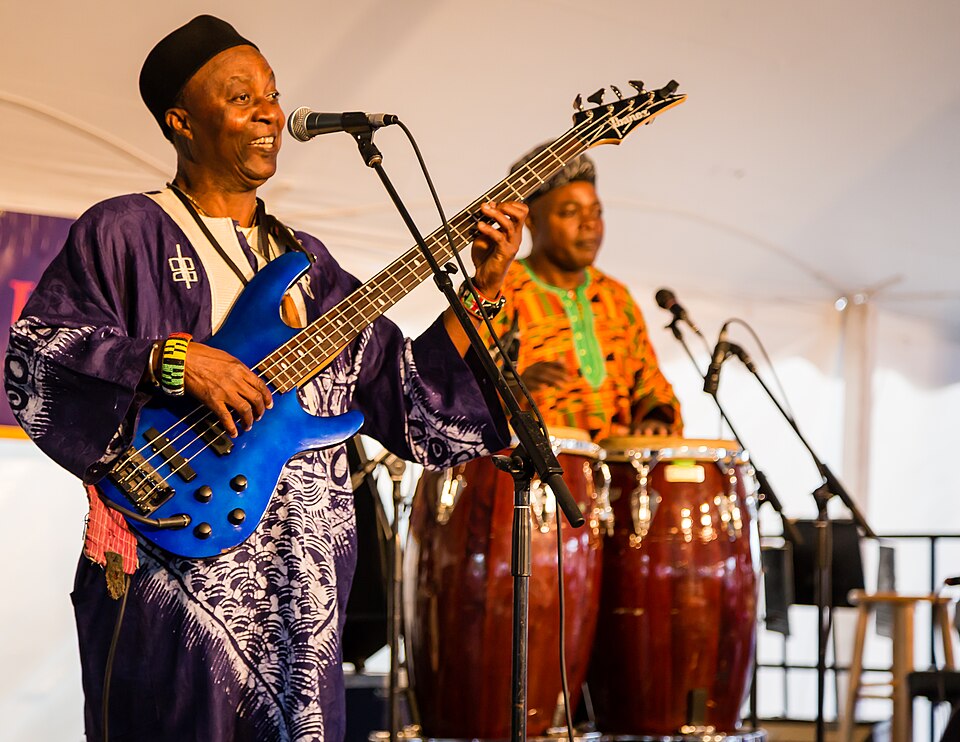
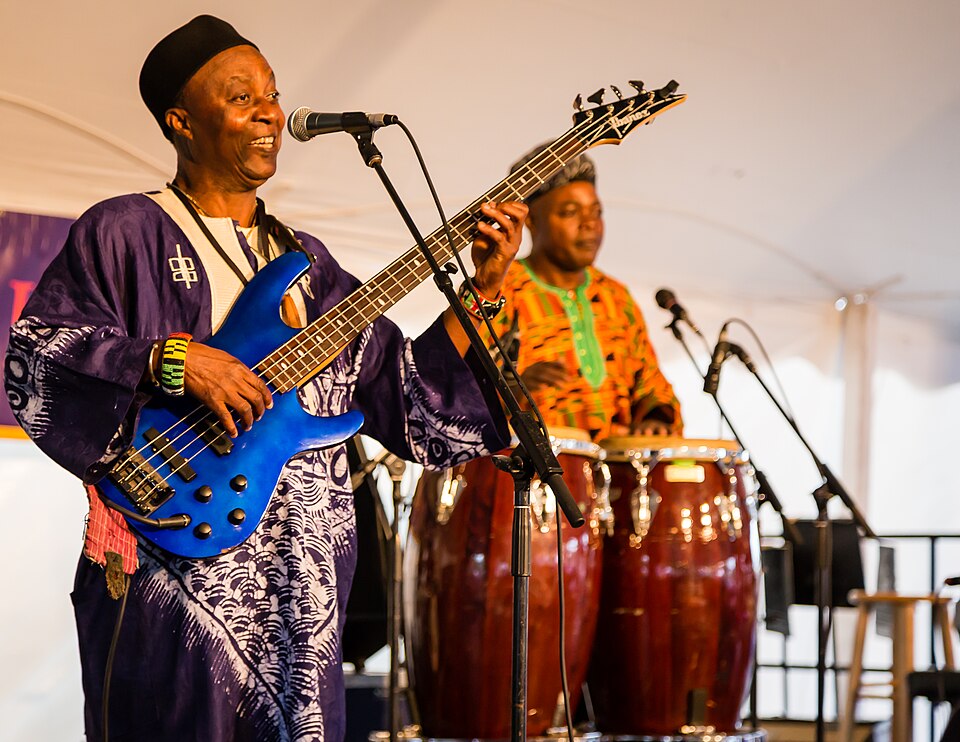
While dance-band highlife belonged to the ballrooms and elite clubs, guitar-band highlife was the people's music — performed in open-air venues, at funerals, in market squares, and through the uniquely Ghanaian institution of the "concert party." These touring troupes combined highlife performance with comic theatrical sketches, creating entertainment that was part morality play, part political satire, and part musical extravaganza. The tradition began with Teacher Yalley's vaudeville-influenced "Two Bobs and Their Carolina Girl" troupe in the 1930s, evolved through Bob Johnson and Ishmael "Bob" Johnson's immensely popular shows in the 1940s, and reached its apex with E.K. Nyame's Akan Trio from 1951.
Nyame (1927-1977), born in Asamankese, was the first to fully merge guitar-band highlife with Akan theatrical tradition. His troupe performed elaborate stories drawn from Ananse folklore, biblical parables, and contemporary social issues, all set to original highlife compositions sung in Twi. A single performance could last four to five hours, drawing crowds of thousands in towns across the cocoa belt. His hit "Onipa Besia Wo Mu" ("Humanity Is Deceitful") became a proverb in its own right.
The concert party tradition produced a stream of social commentary that paralleled the political upheavals of post-independence Ghana. K. Gyasi and his Noble Kings used lyrics to lament the 1966 coup. A.B. Crentsil's "Moses" (1978) was a thinly veiled critique of military rule that somehow escaped censorship. Nana Ampadu's "Ebi Te Yie" ("Some Are Well-Seated," 1967) became an eternal Ghanaian phrase for inequality, later adopted by political campaigns. African Brothers' "Oman Bo Adwo" ("The Nation Is At Peace") offered sardonic commentary on Acheampong's Union Government period when "peace" meant repression.
The guitar bands also served as apprenticeship systems, with master musicians training the next generation in an oral tradition that stretched back through palm-wine music to the sepewa (traditional harp-lute) players of the pre-colonial era. This chain of transmission — from sepewa to palm-wine guitar to concert party to studio recording — represents one of the most remarkable cases of musical continuity in Africa, and ensures that even as Ghanaian popular music races into the future, the heartbeat of highlife remains its foundation.
About This Book
"Rhythms of Freedom: The Rise of Highlife Music and Ghana's Golden Age of Sound" charts the captivating journey of highlife music, tracing its evolution from its nascent stages in the late 19th century to its present-day manifestations. The book meticulously explores the genre's multifaceted origins, highlighting the pivotal role of the Gold Coast's social and cultural landscape. Readers will discover how highlife emerged from a rich confluence of musical traditions, specifically the intricate polyrhythms of Akan music, the spirited recreational tunes of the Ga people, and the formal structure of European brass band music introduced by colonial powers. The narrative vividly paints the scene of early highlife development in the bustling port cities of Sekondi-Takoradi, where palm wine guitar bands created a unique soundscape reflective of working-class life and aspirations. It then moves to Accra, showcasing the sophisticated ballroom orchestras that catered to an emerging elite, blending European dance forms with African sensibilities. The book meticulously examines the contributions of key figures who shaped the genre, with a detailed focus on E.T. Mensah, revered as 'the King of Highlife,' whose innovative arrangements and charismatic stage presence propelled highlife to national and international acclaim. The author dedicates significant space to E.K. Nyame, a guitar virtuoso whose inventive techniques transformed the instrument’s role in highlife, as well as charting the transatlantic journey of Osibisa's explosive fusion of highlife with rock and jazz, expanding its reach and impact on global music scenes. Furthermore, the book intricately weaves highlife's story with the broader historical context of Ghana's struggle for independence and the rise of Pan-Africanism. Highlife became the soundtrack to Ghana’s independence movement, expressing the hopes and dreams of a nation yearning for self-determination. It also played a crucial role in solidifying a modern Ghanaian identity, reflecting both the country’s unique cultural heritage and its aspirations for a progressive future. “Rhythms of Freedom” illuminates how highlife functioned as a powerful medium for social commentary, political expression, and cultural affirmation during Ghana's Golden Age and beyond.
About the Author
The scholarship on highlife music is deeply rooted in the oral traditions and lived experiences of Ghanaian musicians and communities. Pioneers like John Collins, whose extensive fieldwork and publications, including “Highlife Time,” have been crucial in documenting the genre’s history and evolution. Similarly, E.T. Mensah's autobiography offers invaluable insight into the Golden Age of Highlife from the perspective of its leading figure. More recent scholars, such as Jesse Weaver Shipley, have explored highlife's transnational flows and its connection to contemporary African popular culture. The tradition of radio broadcasts by figures like Charles Wereko Brobbey and subsequent music historians have also played a vital role in preserving and disseminating knowledge about highlife's legacy. "Rhythms of Freedom" builds upon this rich foundation, synthesizing existing research with new insights and perspectives to offer a comprehensive understanding of highlife's enduring significance.
Key Themes
- Cultural hybridity
- Postcolonial identity
- Musical innovation
- Pan-Africanism
- Social commentary
- Ghanaian independence
Why This Matters
Highlife music serves as a microcosm of Ghanaian and African history, reflecting the complexities of colonialism, independence, and globalization. It embodies the spirit of cultural innovation and adaptation that has long characterized the continent. Understanding highlife provides crucial insights into how Ghanaians negotiated their identity in the face of colonial influence and forged a unique sense of national pride.
For the diaspora, highlife offers a powerful connection to their ancestral heritage, reminding them of the cultural richness and resilience of the African continent. It showcases how African traditions can be both preserved and reimagined in a modern context. For students, particularly those studying African history, music, or cultural studies, highlife provides a compelling case study of cultural synthesis, artistic expression, and the role of music in shaping social and political landscapes. By engaging with this story, readers can gain a deeper appreciation for the diverse and dynamic nature of African culture and its global impact.
Historical and Cultural Context
The rise of highlife parallels similar developments in other parts of Africa and the African diaspora. The Cuban son, for example, similarly fused European musical forms with African rhythms, creating a distinct national sound. In Nigeria, jùjú music emerged as a vibrant expression of Yoruba culture, while in South Africa, mbaqanga reflected the struggles and aspirations of apartheid-era communities. Highlife's story can also be understood within the broader context of Pan-Africanism, a movement that sought to unite people of African descent across the globe and promote self-determination. These connections highlight the shared experiences and cultural affinities that link African communities across geographical boundaries.
Sources & References
- Collins, John. Highlife Time: The Story of Highlife Music in Ghana. Afram Publications, 1996.
- Collins, John. E.T. Mensah: King of Highlife. Off the Record Press, 1986.
- Plageman, Nate. Highlife Saturday Night: Popular Music and Social Change in Urban Ghana. Indiana University Press, 2013.
- Agyemang, Fred. Ama Ata Aidoo: The Dilemma of a Ghost and Anowa. Longman, 1970.
- Shipley, Jesse Weaver. Living the Hiplife: Celebrity and Entrepreneurship in Ghanaian Popular Music. Duke University Press, 2013.
- Osibisa official discography and interviews, 1969-present.