Keyboard shortcuts
- J: Next chapter
- K: Previous chapter
- T: Toggle table of contents
- Shift+S: Share book
- +: Increase font size
- -: Decrease font size
- Escape: Close modals
Chapter 1
From Asquith Commission to Legon Hill: The Birth of Higher Education in Ghana (1943-1948)
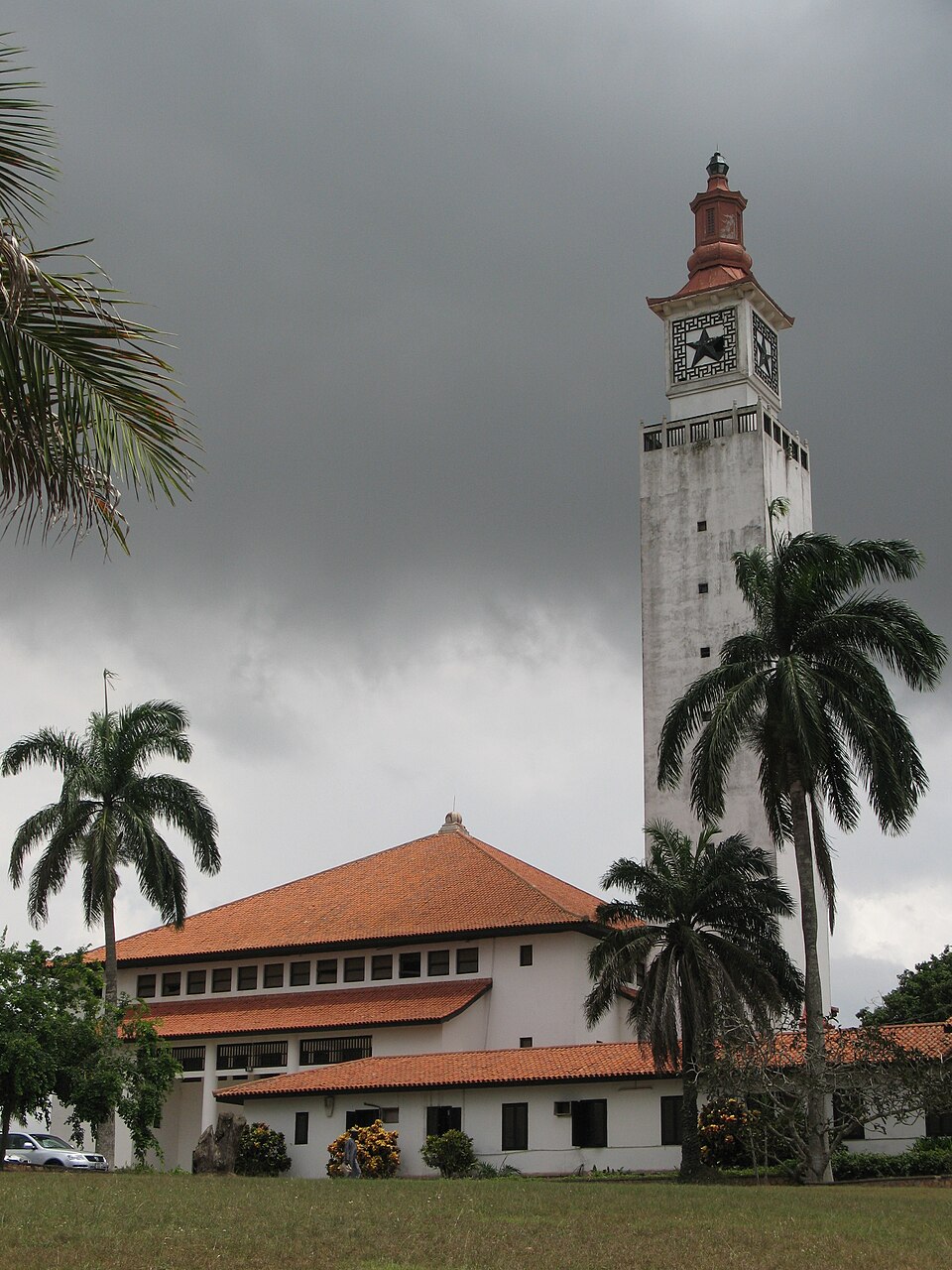
The University of Ghana owes its existence to two wartime British commissions that would reshape higher education across the colonial world. The Asquith Commission on Higher Education in the Colonies, established in August 1943 under Justice Cyril Asquith, recommended the creation of university colleges in association with the University of London. Its West African sub-commission, chaired by Rt. Hon. Walter Elliot with Gold Coast jurist Sir Arku Korsah as a member, went further: it debated whether a single university should serve all of British West Africa, located in Nigeria. The people of the Gold Coast rejected this proposal decisively. Dr. Frederick Victor Nanka-Bruce, a member of the Legislative Council and distinguished physician, delivered a pivotal Radio Station ZOY address to the people of the Gold Coast in October 1947 that, as historian Francis Agbodeka documented in the university's commissioned history published in 1998, was largely instrumental in influencing the Secretary of State for the Colonies to consent to a separate Gold Coast institution. On 11 August 1948, the University College of the Gold Coast was founded by Ordinance, with the stated purpose of providing for and promoting university education, learning and research. Its first principal was David Mowbray Balme, a Cambridge-educated classicist who had served in the Colonial Office. The institution began with 90 students in temporary quarters at Achimota School before moving to its permanent 2,600-acre campus on Legon Hill, 12 kilometres northeast of central Accra, where the University Avenue, ornamental fountain, and the Balme Library named in his honour would become the physical symbols of Ghanaian intellectual aspiration. The founding curriculum emphasized liberal arts, social sciences, basic science, agriculture, law, and medicine, following the British university tradition of producing well-rounded graduates rather than narrow specialists. The Elliot Commission's majority report had envisioned exactly this kind of institution: a place where the Gold Coast's brightest minds could receive a world-class education without leaving their homeland.
About This Book
"The University of Ghana: Legon's Legacy" meticulously charts the genesis and development of Ghana's first university, offering a rich tapestry of the political, social, and intellectual currents that shaped its identity. The narrative begins with the University College of the Gold Coast's establishment in 1948, under the auspices of the University of London, a move designed to provide higher education opportunities within the colony. The book explores the initial debates surrounding the curriculum, the tension between meeting the immediate manpower needs of the Gold Coast and fostering a broader liberal arts education. Figures such as Principal David Balme and key faculty members are brought to life, their roles in shaping the early academic culture examined in detail. The book delves into the profound impact of Ghana's independence in 1957 on the institution's trajectory. Kwame Nkrumah's vision for a truly African university, one that would actively contribute to the nation's development and reflect its cultural heritage, is a central theme. It discusses the transition from affiliation with London to full autonomy in 1961, a pivotal moment symbolizing Ghana's newfound sovereignty. The establishment of new departments and institutes focused on African studies, such as the Institute of African Studies under the direction of the renowned Professor Alexander Kwapong, is highlighted as a deliberate effort to decolonize the curriculum and promote African scholarship. Furthermore, the book addresses the challenges faced by the University during periods of political instability, including military coups and economic difficulties. It examines how these events impacted academic freedom, funding, and the overall direction of the institution. Finally, it assesses the University of Ghana's contributions to national development, its role in training generations of leaders, and its enduring legacy as a leading center of learning on the African continent. Readers will gain a comprehensive understanding of the complex interplay between politics, education, and nation-building in post-colonial Ghana.
About the Author
While this particular book may be a recent compilation, the scholarship it draws upon represents a long and vibrant tradition. Early accounts of the University's history were often produced by individuals directly involved in its founding and administration, offering valuable insider perspectives. Later, Ghanaian historians such as Professor A. Adu Boahen and Professor Kwame Arhin made substantial contributions by placing the University's story within the broader context of Ghanaian and African history. Moreover, the voices of alumni and former faculty members, captured through oral histories and memoirs, provide invaluable qualitative data. The ongoing work of scholars in the University's own departments of history and political science continues to enrich our understanding of this pivotal institution.
Key Themes
- Decolonization of Education
- National Development
- Political Influence on Academia
- Africanization of Curriculum
- Academic Freedom
- Post-Colonial Identity
Why This Matters
The University of Ghana's story is fundamentally important for understanding the complexities of post-colonial nation-building in Africa. It reveals the aspirations and challenges faced by newly independent nations seeking to create educational institutions that reflected their own cultural values and developmental goals. Examining the University's evolution sheds light on the ongoing debates surrounding the purpose of higher education in Africa--should it primarily serve the immediate needs of the state, or should it foster critical thinking and intellectual inquiry?
For the African diaspora, the University of Ghana represents a tangible link to the continent and a testament to the intellectual capacity of African people. Its enduring legacy as a center of excellence should inspire pride and encourage further engagement with African scholarship. For students, both in Ghana and abroad, understanding the University's history provides valuable insights into the role of education in shaping societies and the importance of preserving academic freedom and intellectual integrity. The struggles and triumphs of Legon offer a powerful reminder of the transformative potential of education.
Historical and Cultural Context
The establishment of the University of Ghana fits within a broader historical context of expanding higher education across Africa during the late colonial and early independence eras. Similar institutions were founded in Nigeria (University of Ibadan), Uganda (Makerere University), and other African countries, often modeled on the British university system. These institutions played a crucial role in training the personnel needed to staff the civil service, manage the economy, and drive development initiatives in newly independent nations. Placing the University of Ghana within this pan-African context highlights the shared experiences and challenges faced by these institutions as they navigated the transition from colonial rule to self-determination.
Sources & References
- University of Ghana Official History. ug.edu.gh
- Agbodeka, Francis. A History of University of Ghana: Half a Century of Higher Education. Woeli Publishing, 1998.
- Asquith Commission Report on Higher Education in the Colonies. HMSO, 1945.
- Nketia, J.H. Kwabena. The Music of Africa. W.W. Norton, 1974.
- Aidoo, Ama Ata. Our Sister Killjoy. Longman, 1977.
'/%3E%3Crect width='900' height='1200' fill='url(%23p)' opacity='.7'/%3E%3Ctext x='450' y='560' text-anchor='middle' font-size='140' font-family='serif'%3E%E2%9C%8A%3C/text%3E%3Ctext x='450' y='680' text-anchor='middle' fill='%23fff3c4' font-size='54' font-family='Georgia,serif' font-weight='700'%3ESankofa Library%3C/text%3E%3Ctext x='450' y='745' text-anchor='middle' fill='%23fff3c4' fill-opacity='.8' font-size='30' font-family='Arial,sans-serif'%3ECover under review%3C/text%3E%3C/svg%3E)