
Keyboard shortcuts
- J: Next chapter
- K: Previous chapter
- T: Toggle table of contents
- Shift+S: Share book
- +: Increase font size
- -: Decrease font size
- Escape: Close modals
Chapter 1
Part 1
In the landscape of African literature, where male voices have long dominated the narrative of the continent's intellectual awakening, Ama Ata Aidoo stands as a towering, unapologetic exception. Born Christina Ama Aidoo in 1942 in the small town of Abeadzi Kyiakor in the Central Region of the Gold Coast, she would grow to become one of the most important writers in the history of African letters. She was a playwright, novelist, poet, short story writer, academic, and, for a brief but turbulent period, a government minister. She used every one of these platforms to articulate a singular, uncompromising message: the African woman is not a footnote in the story of the continent. She is the story itself.
This narrative examines the life and literary contributions of Ama Ata Aidoo through the lens of her fierce commitment to centering the African woman's experience. It traces her early literary experiments at the University of Ghana, Legon, her groundbreaking plays and novels, her tumultuous political career, and her lasting influence on generations of African women writers. Her work was never content to simply depict the struggles of African women. It demanded that readers, both African and Western, confront the systems of patriarchy, colonialism, and neo-colonialism that conspired to silence them.
## Early Life and Literary Beginnings
Ama Ata Aidoo was born into a family with a strong tradition of oral storytelling and political engagement. Her father, Nana Yaw Fama, was the chief of Abeadzi Kyiakor and a firm believer in the importance of education. He had established a school in the town and ensured that his daughter received the best education available, a decision that was progressive by the standards of the era, when many families still prioritized the education of sons over daughters. Aidoo later credited her father's unwavering support as the foundation upon which her entire career was built.
About This Book
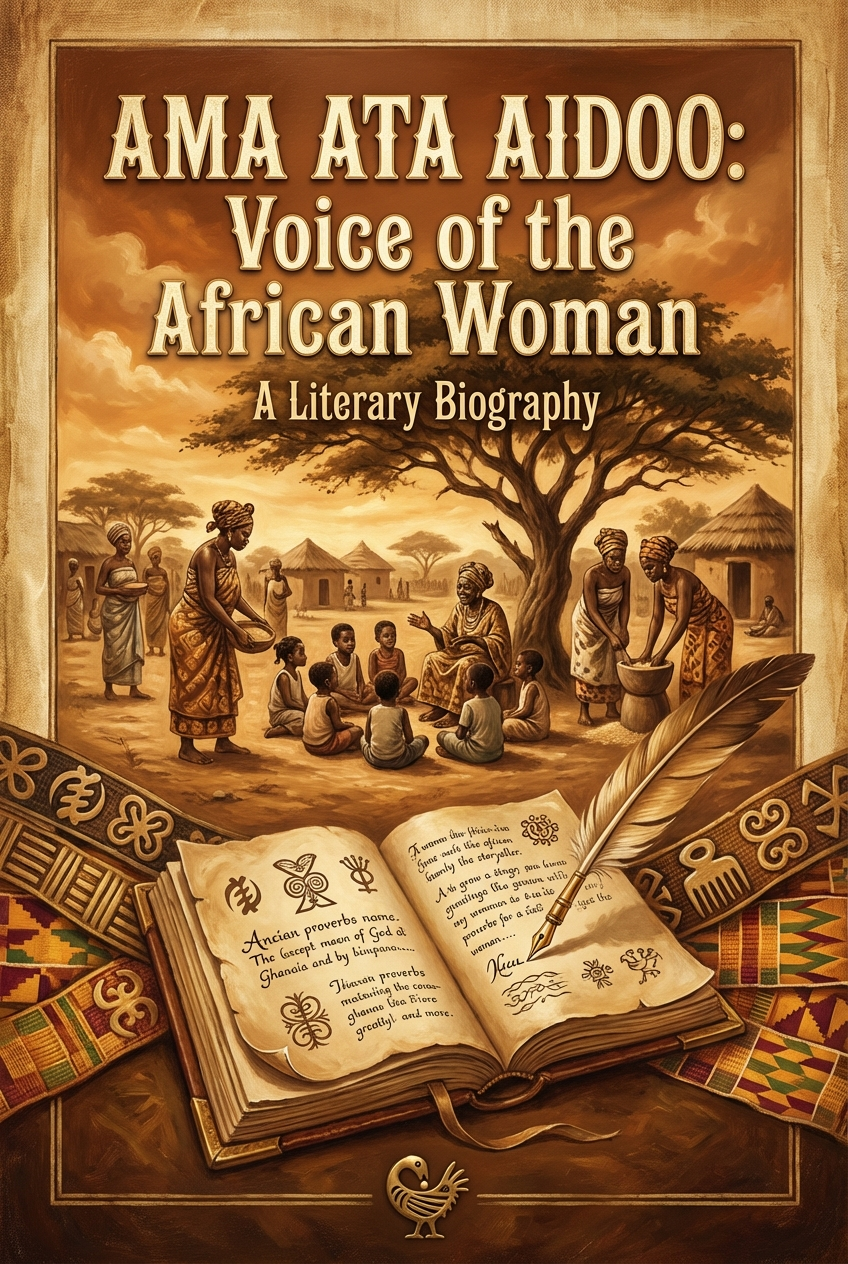
"Ama Ata Aidoo: Voice of the African Woman" delves into the multifaceted literary career and profound social impact of one of Africa's most important writers. The book meticulously analyzes Aidoo’s plays like "The Dilemma of a Ghost," which examines the complexities of cultural identity and the challenges faced by African immigrants returning home, and "Anowa," a powerful indictment of the slave trade and its devastating consequences on African society, particularly on women. It explores her novels, notably "Our Sister Killjoy," a semi-autobiographical work that grapples with Pan-Africanism, neocolonialism, and the disillusionment with post-independence Africa, and "Changes," a poignant story about a contemporary Ghanaian woman navigating the challenges of marriage, career, and societal expectations. The book further investigates Aidoo's short stories and poetry, highlighting her insightful observations on gender inequality, the burden of tradition, and the search for personal fulfillment in a rapidly changing world. It contextualizes her writing within the broader landscape of post-colonial African literature and feminism, demonstrating how Aidoo’s work challenged prevailing patriarchal norms and gave voice to the experiences of African women. Furthermore, the book examines Aidoo's brief but impactful tenure as Ghana's Minister of Education under the Provisional National Defence Council (PNDC) government led by Jerry John Rawlings. Her progressive educational reforms and her advocacy for increased access to education for girls are explored, as are the political challenges that ultimately led to her resignation. "Ama Ata Aidoo: Voice of the African Woman" ultimately positions Aidoo as a literary pioneer and a vital intellectual figure whose works continue to resonate with readers across the globe, inspiring critical reflection on issues of gender, identity, and social justice in Africa and beyond. The reader will gain a deeper understanding of Aidoo’s significant contributions to African literature and her enduring legacy as a champion of women's rights.
About the Author
The scholarly tradition surrounding Ama Ata Aidoo's work is rich and diverse. Early critical engagements, often found in journals like *Research in African Literatures* and *African Literature Today*, focused on interpreting her nuanced portrayal of gender and cultural conflict. Scholars such as Gay Wilentz and Carole Boyce Davies have made foundational contributions by centering Aidoo’s writings within a framework of African feminist thought. More recently, scholars such as Nana Akua Anyidoho have expanded on this, looking at her full body of work with a focus on its ongoing relevance in contemporary African society. This book draws upon a wide range of academic articles, interviews, and biographical sources, building upon the established tradition of scholarship and offering a comprehensive analysis of Aidoo's life and work. It acknowledges the critical foundations laid by these pioneering scholars who first recognized and championed Aidoo’s unique voice and literary contributions.
Key Themes
- African Feminism
- Neocolonialism
- Gender Inequality
- Cultural Identity
- Post-Independence Disillusionment
- The Burden of Tradition
Why This Matters
Ama Ata Aidoo's work is crucially important for understanding Ghanaian and African heritage because it provides invaluable insights into the lived experiences of African women during a period of profound social and political change. Her writings challenge dominant narratives and offer alternative perspectives on issues such as colonialism, patriarchy, and the complexities of cultural identity. Aidoo's unflinching portrayal of the challenges faced by African women resonates deeply with contemporary audiences, particularly the diaspora, who may grapple with similar issues of belonging, identity, and social justice.
Engaging with Aidoo’s story allows readers to confront uncomfortable truths about the past and to reflect on the ongoing struggles for gender equality and social justice in Africa and beyond. Her work is especially relevant for students as it encourages critical thinking, fosters empathy, and promotes a deeper understanding of the complexities of African history and culture. By studying Aidoo, readers can gain a more nuanced and informed perspective on the multifaceted experiences of African women and their contributions to shaping the continent's future.
Historical and Cultural Context
Aidoo's work can be situated within the broader context of the African Writers Series, a Heinemann publishing initiative that played a pivotal role in showcasing African literature to a global audience. The series provided a platform for writers like Chinua Achebe, Wole Soyinka, and Ngũgĩ wa Thiong'o, alongside Aidoo, to share their stories and challenge colonial representations of Africa. Within the Sankofa Digital Heritage Library, Aidoo’s narratives of cultural negotiation and post-colonial struggles can be further explored through connections with texts addressing pan-Africanism and nation-building efforts after independence. This intertextual engagement will deepen the understanding of the intellectual and artistic currents shaping post-colonial Africa.


'/%3E%3Crect width='900' height='1200' fill='url(%23p)' opacity='.7'/%3E%3Ctext x='450' y='560' text-anchor='middle' font-size='140' font-family='serif'%3E%E2%AD%90%3C/text%3E%3Ctext x='450' y='680' text-anchor='middle' fill='%23fff3c4' font-size='54' font-family='Georgia,serif' font-weight='700'%3ESankofa Library%3C/text%3E%3Ctext x='450' y='745' text-anchor='middle' fill='%23fff3c4' fill-opacity='.8' font-size='30' font-family='Arial,sans-serif'%3ECover under review%3C/text%3E%3C/svg%3E)