
Keyboard shortcuts
- J: Next chapter
- K: Previous chapter
- T: Toggle table of contents
- Shift+S: Share book
- +: Increase font size
- -: Decrease font size
- Escape: Close modals
Chapter 1
Overview: The Revolution That Changed Everything
June 4, 1979 stands as the most violent and transformative day in modern Ghanaian history. Before dawn, junior military officers freed Flight Lieutenant Jerry John Rawlings from military prison, where he awaited court-martial for an attempted coup. By 6:00 AM, Rawlings was broadcasting live on state radio, declaring the overthrow of the Supreme Military Council (SMC) and the formation of the Armed Forces Revolutionary Council (AFRC). By late afternoon, soldiers had stormed the homes of senior officers and former heads of state. Within three weeks, eight military generals—including three former leaders of Ghana—would be executed by firing squad at Teshi Shooting Range in Accra.
The June 4th Uprising was not merely a change of military leadership; it was a populist revolt against institutionalized corruption, military arrogance, and economic collapse. Ghana in 1979 was a nation in free-fall: inflation exceeded 100% annually, basic goods vanished from markets (only available through kalabule, the black market), cocoa production had halved since the 1960s, and per capita GDP had declined 3.2% per year for a decade. Ordinary Ghanaians blamed the military and political elite for looting the country while the masses starved.
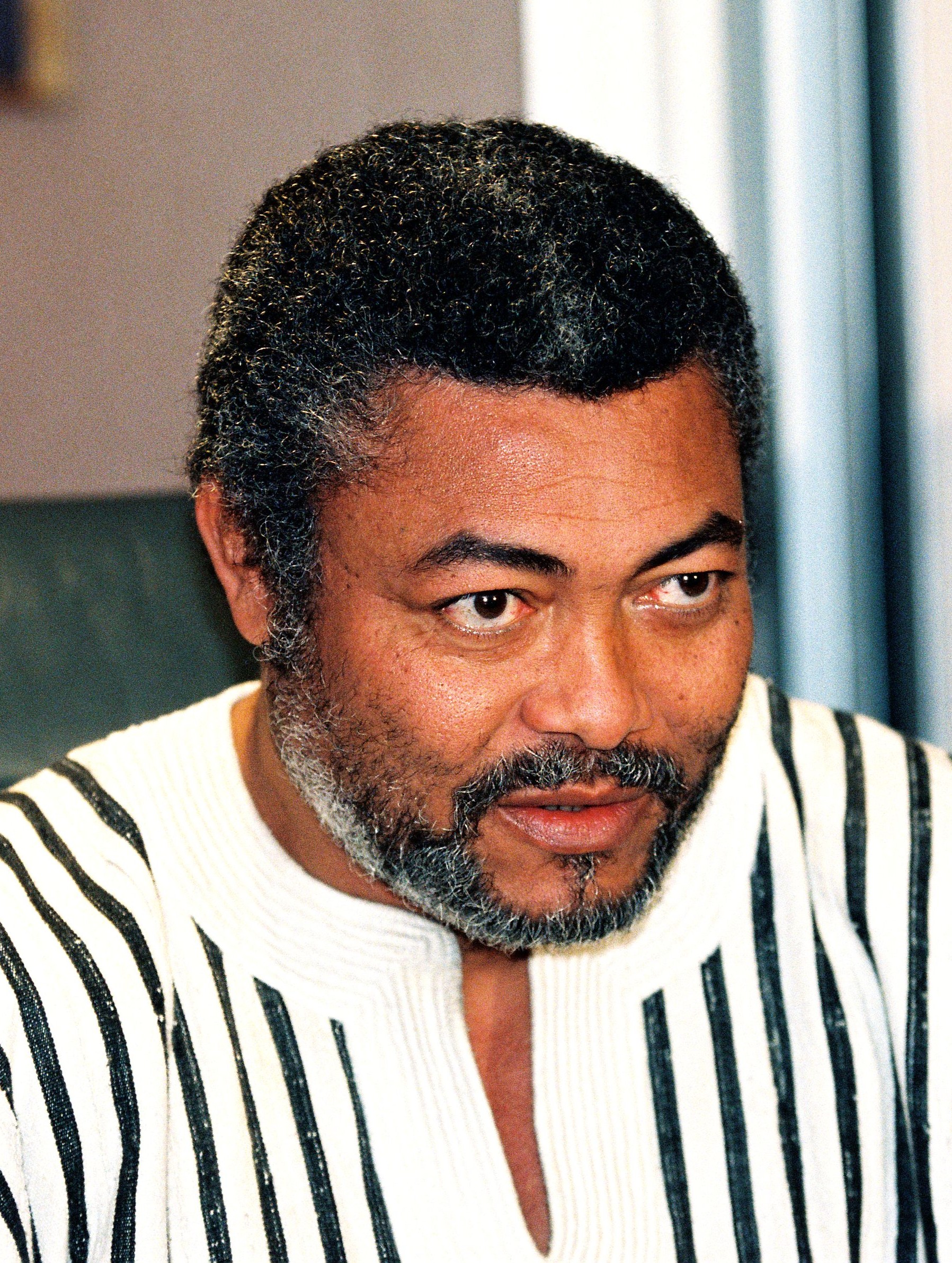
Rawlings, the 32-year-old son of a Scottish father and Ghanaian mother, became the voice of this rage. His radio address on June 4th—delivered in improvised, fiery language—called for a "housecleaning exercise" to rid Ghana of corruption. "The people have suffered enough!" he declared, promising that the AFRC would punish the "fat cats" and restore justice before handing power to a democratically elected government. Crowds poured into the streets in celebration. Market women, students, and laborers hailed Rawlings as a savior.
The AFRC ruled for 112 days—from June 4 to September 24, 1979. In that short, chaotic period, it executed eight senior officers, destroyed the careers of hundreds more through public trials, emptied markets through forced price controls, and terrified the Ghanaian elite. Yet the AFRC kept its promise: on September 24, 1979, Rawlings handed power to Dr. Hilla Limann, the democratically elected president, in a ceremony that shocked observers who had assumed another military regime would cling to power indefinitely.
The legacy of June 4th remains deeply contested. To supporters, it was a revolutionary cleansing that broke the stranglehold of corrupt elites and set the stage for accountability in governance. To critics, it was populist mob justice that normalized political violence, undermined due process, and traumatized Ghana's military and civilian institutions. Both perspectives contain truth. Understanding June 4th requires understanding the context of despair that preceded it, the explosive violence of its execution, and the long shadow it cast over Ghanaian politics for decades.
About This Book
"June 4th Uprising: Jerry Rawlings and the Bloody Revolution That Shook Ghana" delves into the tumultuous events of 1979 that radically altered Ghana's political trajectory. The book meticulously chronicles the socioeconomic and political conditions that precipitated the uprising. It explores the pervasive corruption within the Supreme Military Council (SMC) regime, led by General Ignatius Kutu Acheampong and later General Frederick Akuffo, detailing how mismanagement, economic decline, and blatant abuse of power fueled widespread public discontent. The narrative vividly portrays Flight Lieutenant Jerry John Rawlings, a charismatic junior officer, as the catalyst for the uprising. It examines his initial arrest and trial for mutiny, an event that inadvertently amplified his public image as a champion of the oppressed. The book meticulously reconstructs the events of June 4th, when junior officers and enlisted men, inspired by Rawlings' ideals of social justice and accountability, stormed the prisons and released him, triggering a nationwide revolt. The book unflinchingly confronts the controversial aspects of the uprising, including the summary trials and executions of three former heads of state -- Generals Acheampong, Afrifa, and Akuffo -- as well as senior military officers deemed corrupt. It analyzes the justification for these actions, the debates surrounding their legitimacy, and their lasting impact on Ghana's political culture. The book also discusses the establishment of the Armed Forces Revolutionary Council (AFRC), the short-lived military government led by Rawlings, and its efforts to address corruption, restore discipline, and prepare the country for a return to civilian rule. It further investigates the AFRC's policies, including the "housecleaning exercise," aimed at rooting out corruption and enforcing price controls, and their consequences on various segments of Ghanaian society. Finally, the book examines the legacy of the June 4th Uprising, analyzing its role in shaping Ghana's subsequent political development, including the rise of Rawlings and the Provisional National Defence Council (PNDC).
About the Author
Scholarship on the June 4th Uprising is diverse, reflecting the event's enduring significance and its contested interpretations. Academic works by historians like Dennis Austin and Richard Jeffries provide valuable insights into the socio-political context of the late 1970s in Ghana. Jeff Haynes’ work on political transformation in Ghana provides vital context. More recent scholarly articles in journals such as the *Journal of Modern African Studies* offer nuanced perspectives on the uprising's causes, consequences, and legacy. Oral histories, conducted by researchers at institutions like the Institute of African Studies at the University of Ghana, provide firsthand accounts from participants and witnesses, enriching our understanding of the event from diverse perspectives. Furthermore, memoirs and autobiographies of key figures involved, including Jerry Rawlings himself, offer invaluable primary source material, albeit often with inherent biases. These sources, when critically examined, contribute to a multifaceted understanding of this pivotal moment in Ghanaian history.
Key Themes
- Military intervention
- Corruption and accountability
- Social justice
- Revolution and political change
- Economic crisis
- Charismatic leadership
Why This Matters
The June 4th Uprising holds immense significance for understanding Ghanaian and African heritage. It represents a pivotal moment in Ghana's post-independence history, highlighting the challenges of governance, corruption, and social inequality that plagued many African nations during this era. The uprising serves as a stark reminder of the potential for popular discontent to erupt into revolutionary action when leaders fail to address the needs of their people.
For the diaspora, the June 4th Uprising offers a valuable case study of the complexities of post-colonial development and the ongoing struggle for social justice in Africa. It underscores the importance of understanding the historical roots of contemporary challenges facing the continent. Students can learn valuable lessons about the dynamics of power, the role of leadership, and the consequences of corruption in shaping national destinies. By engaging with this story, readers can gain a deeper appreciation for the resilience and determination of the Ghanaian people in their pursuit of a more just and equitable society.
Historical and Cultural Context
The June 4th Uprising can be contextualized within the broader history of military interventions in post-colonial Africa. Similar uprisings, fueled by corruption, economic mismanagement, and social unrest, occurred in other African countries during the same period. It also connects to the larger themes of pan-Africanism and the quest for self-determination that characterized the post-independence era. Within the Sankofa Library, this book complements materials on Ghana's independence struggle, the Nkrumah era, and subsequent periods of political and economic instability, offering a comprehensive view of Ghana's modern history.


'/%3E%3Crect width='900' height='1200' fill='url(%23p)' opacity='.7'/%3E%3Ctext x='450' y='560' text-anchor='middle' font-size='140' font-family='serif'%3E%E2%AD%90%3C/text%3E%3Ctext x='450' y='680' text-anchor='middle' fill='%23fff3c4' font-size='54' font-family='Georgia,serif' font-weight='700'%3ESankofa Library%3C/text%3E%3Ctext x='450' y='745' text-anchor='middle' fill='%23fff3c4' fill-opacity='.8' font-size='30' font-family='Arial,sans-serif'%3ECover under review%3C/text%3E%3C/svg%3E)