Keyboard shortcuts
- J: Next chapter
- K: Previous chapter
- T: Toggle table of contents
- Shift+S: Share book
- +: Increase font size
- -: Decrease font size
- Escape: Close modals

Cover: Own work CC BY-SA 4.0 via Wikimedia Commons
White Crystals, Wetlands, and Work: The Ada Songor Salt Economy in Ghanaian History
- salt
- Ada
- Songor Lagoon
- coastal economy
- women's work
- resource rights
Chapter 1
Salt Before the Factory
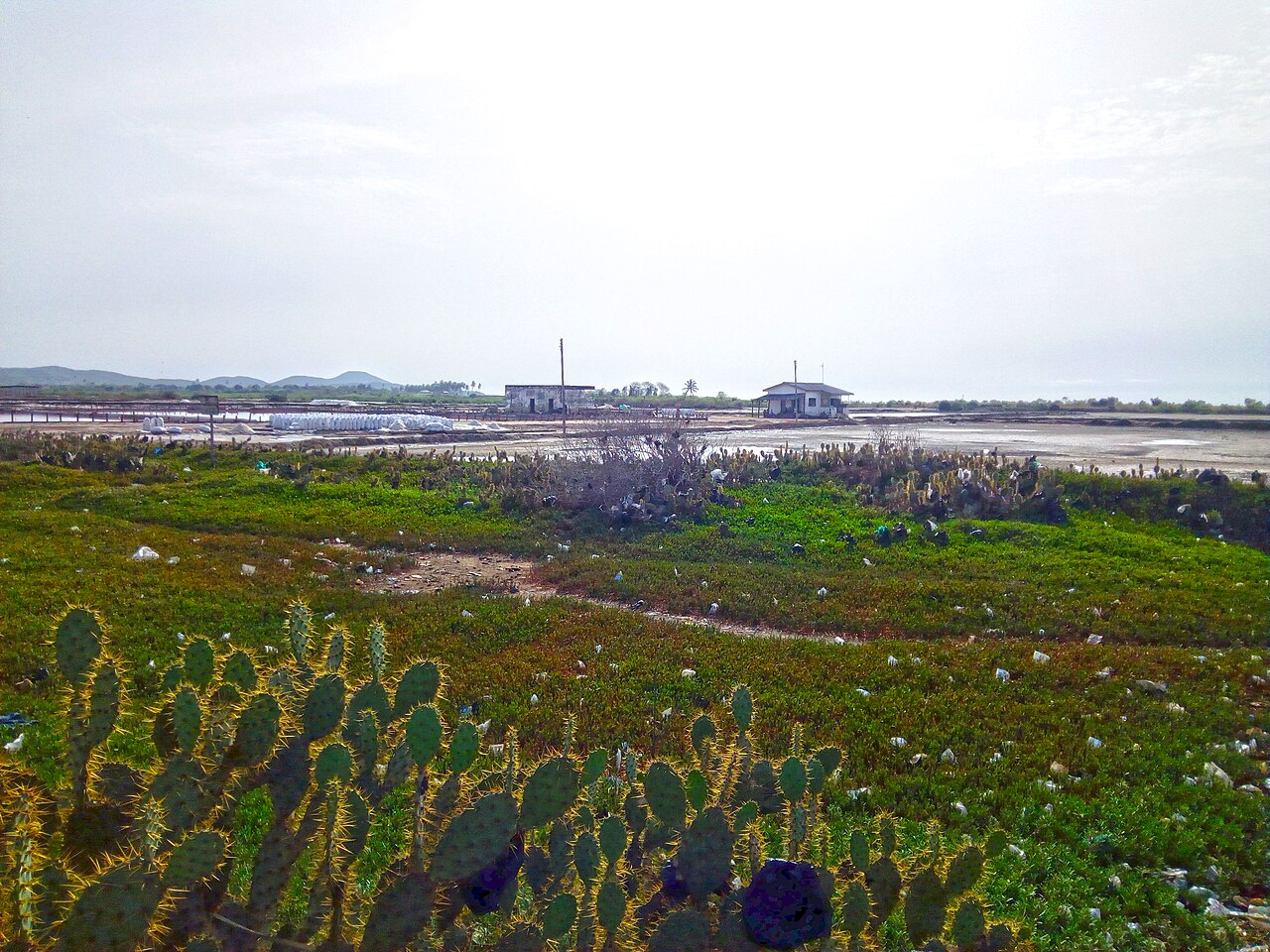
Salt is one of the oldest necessities in Ghanaian history. It preserves fish, seasons food, supports animal health, and once moved through long-distance trade with the authority of a strategic commodity. Before industrial schemes and concession debates, coastal communities harvested salt from lagoons, pans, and evaporating flats using ecological knowledge built over generations. At Ada, the Songor Lagoon became a landscape of work, memory, and identity.
The Songor system sits near the Volta estuary, where tides, freshwater flows, rainfall, dry-season heat, wind, and lagoon management shape salt formation. Salt making depends on patience and observation. Workers read the color of brine, the depth of water, the timing of evaporation, and the quality of crystals. Too much rain can ruin a harvest. Poorly managed channels can change salinity. Pollution or blocked flows can weaken the lagoon's productivity. The salt economy therefore begins with ecology, not only labor.
Dangme communities around Ada did not treat Songor as empty land waiting for outside development. It was a shared resource embedded in customary claims, seasonal use, household economies, and social obligations. Salt supported fishing communities, traders, market women, porters, canoe owners, and inland consumers. Its value traveled far beyond the lagoon. A pinch of salt in soup carried the labor of coastal Ghana into homes across the country.
About This Book
The Songor Lagoon is one of Ghana's most important salt landscapes. Its story connects Dangme coastal communities, women's work, regional trade, colonial and postcolonial policy, environmental pressure, and debates over who should benefit from natural resources.
Key Themes
- salt
- Ada
- Songor Lagoon
- coastal economy
- women's work
- resource rights
Why This Matters
Ada Songor shows how a common mineral can become a lens on labor, ecology, customary rights, industrial policy, gender, and resource justice in Ghana.
Historical and Cultural Context
Created during the 2026-07-14 Sankofa daily content sprint after duplicate checks against the existing catalogue.
Sources & References
- Ghana Minerals Commission and salt sector public materials
- Studies on Songor Lagoon and Ada coastal livelihoods
- Ghana Environmental Protection Agency wetland references
- Oral-history based scholarship on Dangme coastal communities