
Keyboard shortcuts
- J: Next chapter
- K: Previous chapter
- T: Toggle table of contents
- Shift+S: Share book
- +: Increase font size
- -: Decrease font size
- Escape: Close modals
Chapter 1
Part 1
## The Shea Tree: An Ancient Partnership
Long before multinational cosmetic companies discovered shea butter, long before it appeared in luxury moisturizers on shelves in Paris and New York, the shea tree — Vitellaria paradoxa, known in Dagbani as 'sii' and in Twi as 'nkuto' — was already ancient. The trees that tower above the Guinea savannah of Ghana's Northern, Upper East, and Upper West regions have been growing for centuries, some individual specimens reaching 200 to 300 years in age. They are not planted by human hands but rather protected, encouraged, and harvested through generations of careful stewardship by the communities that depend on them.
For the women of northern Ghana — Mamprusi, Dagomba, Kusasi, Frafra, Builsa, Sissala, Lobi, and dozens of other ethnic groups — the shea tree is more than a source of income. It is a lifeline, a calendar, a community gathering point, and a marker of cultural identity. The seasonal rhythm of shea — fruit falling between May and August, collection and processing through the rainy season, marketing and storage in the dry months — organizes life in ways that go far deeper than economics. Children learn to identify mature fruits before they can read. Women pass extraction techniques from mother to daughter across generations. The shea tree, in the social ecology of the northern savannah, is what the cocoa tree is to the Ashanti south: a living archive of agricultural knowledge, economic survival, and cultural continuity.
## Chemical Composition and Global Demand
Shea butter's commercial value rests on its extraordinary biochemical properties. The fat extracted from the kernel of the shea fruit is approximately 45-50% oleic acid (a monounsaturated fatty acid also abundant in olive oil), 35-40% stearic acid, and smaller quantities of linoleic, palmitic, and arachidic acids. This composition gives shea butter a semi-solid consistency at room temperature, a melting point close to body temperature (making it absorb readily into skin), and a shelf stability that allows it to be stored for years without refrigeration — critical in environments without cold chain infrastructure.
Beyond the skin care and cosmetic applications that dominate its global market profile, shea butter has significant uses in food manufacturing. Its stearic acid fraction — known as shea stearin — is a cocoa butter equivalent used by the chocolate industry as a partial substitute for cocoa butter in compound chocolate. The European Union regulates the use of vegetable fats, including shea, as cocoa butter equivalents in chocolate, permitting up to 5% substitution. This food use accounts for a substantial portion of global shea trade, connecting the savannahs of northern Ghana to chocolate factories in Belgium, Switzerland, and the United Kingdom.
The cosmetics industry's demand is driven by shea's rich content of non-saponifiable compounds — particularly tocopherols (vitamin E), triterpene alcohols, and phenolic compounds — that provide antioxidant, anti-inflammatory, and UV-filtering properties. These bioactive components have made shea butter a sought-after ingredient in premium skincare formulations, hair care products, lip balms, soaps, and sunscreens. As consumer preference for 'natural' ingredients has surged globally, shea butter's appeal has grown correspondingly, making it one of the most widely used African agricultural commodities in the global beauty industry.
## Traditional Extraction: The Women's Art
About This Book
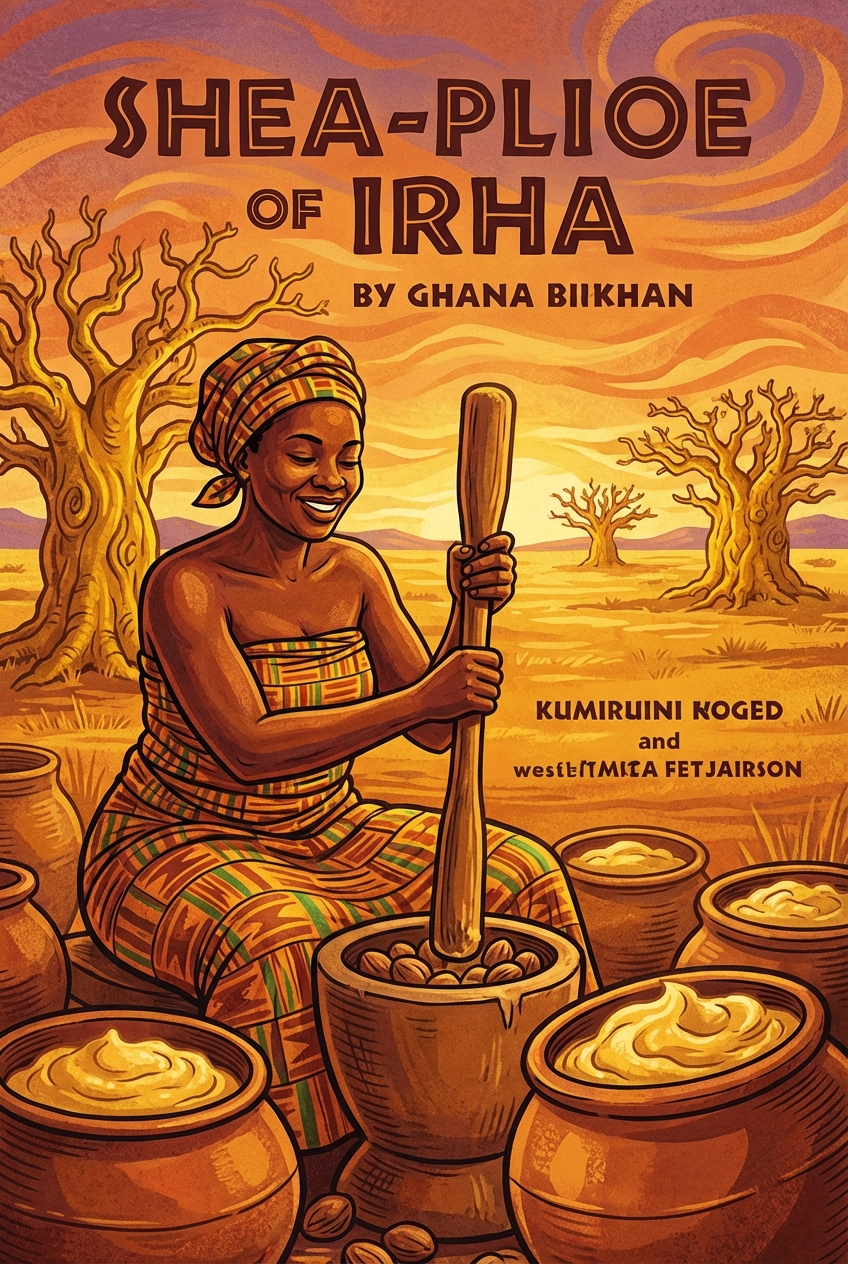
"White Gold of the Savannah" meticulously charts the multifaceted narrative of shea butter in Northern Ghana, from the pre-colonial era to its present status as a global commodity. The book opens by establishing the deep cultural and ecological significance of the shea tree (Vitellaria paradoxa) in Northern Ghanaian communities, predating formal records. It details how, for centuries, shea butter production was intrinsically linked to women's livelihoods, providing a crucial source of income, nutritional security, and social capital, particularly in regions grappling with challenging environmental conditions and limited agricultural opportunities. The narrative then moves into the colonial period, exploring how British trade interests began to recognize shea butter's economic potential, though exploitation differed from resources like gold or cocoa. The book analyses how post-independence governments attempted to incorporate shea butter into national development plans, facing challenges related to infrastructural deficits, market access, and fluctuating global prices. A significant portion of the work is dedicated to the late 20th and early 21st centuries, highlighting the rise of Fair Trade initiatives, organic certification, and the growing demand from the international cosmetics industry. It discusses the impact of globalization on traditional production methods, examining both the opportunities and challenges faced by women producers as they navigate increasingly complex value chains. The book investigates the role of NGOs, international development agencies, and private sector companies in shaping the shea butter industry, with a critical perspective on the sustainability and equitable distribution of benefits. Key figures discussed might include pioneering women entrepreneurs who organized local cooperatives, as well as researchers and advocates who championed fair trade practices. The book concludes by reflecting on the future of shea butter in Northern Ghana, emphasizing the need for policies that protect the environment, empower women, and ensure that the economic benefits of this 'white gold' are shared equitably within the communities that have sustained it for generations. Readers will gain a comprehensive understanding of the economic, social, and environmental dimensions of the shea butter industry and its crucial role in the development trajectory of Northern Ghana.
About the Author
The study of shea butter in Northern Ghana has been shaped by a diverse range of scholars. Early anthropological studies, such as those by Cardinall and Rattray in the colonial era, offered initial glimpses into the cultural significance of shea among communities like the Dagomba and Gonja. However, these accounts often lacked an economic focus. Post-independence, scholars like Nabila and Songsore began to examine the socio-economic dimensions of shea production within the context of rural development. More recently, feminist geographers and development economists, such as Dr. Akua Britwum and Dr. Dzodzi Tsikata, have contributed crucial analyses of the gendered dynamics of the shea butter industry, highlighting the role of women as primary producers and the challenges they face in accessing markets and resources. This book builds upon this existing body of work, drawing from oral histories, archival records, and contemporary ethnographic research to provide a comprehensive and nuanced account of the shea butter economy.
Key Themes
- Women's Economic Empowerment
- Sustainable Development
- Global Commodity Chains
- Northern Ghana
- Fair Trade
- Traditional Knowledge
- Environmental Sustainability
Why This Matters
The story of shea butter in Northern Ghana matters deeply for understanding both Ghanaian and African heritage because it encapsulates the resilience, ingenuity, and economic agency of marginalized communities. For centuries, shea butter has been more than just a commodity; it's been a source of livelihood, a cultural symbol, and a marker of identity for millions of women in the savannah regions. Its journey to global markets highlights the complexities of international trade and the challenges of ensuring that local communities benefit equitably from their resources.
For the diaspora, this story offers a powerful connection to the continent's rich agricultural heritage and the entrepreneurial spirit of its people. For students, it provides a valuable case study in development economics, environmental sustainability, and the importance of empowering women in the global economy. By understanding the history and current dynamics of the shea butter industry, readers can gain a deeper appreciation for the challenges and opportunities facing rural communities in Africa and the potential for sustainable and equitable development.
Historical and Cultural Context
The story of shea butter echoes broader themes in African history, particularly the struggle for economic self-determination in the face of global market forces. It connects to the histories of other agricultural commodities, such as cocoa in Southern Ghana or coffee in East Africa, where local producers have sought to navigate international trade relationships while preserving their cultural practices and livelihoods. Within the Sankofa Library, this book complements texts on women's roles in African economies, agricultural innovation, and the environmental history of the savannah regions, offering a rich tapestry of interconnected narratives that illuminate the complexities of African development.


'/%3E%3Crect width='900' height='1200' fill='url(%23p)' opacity='.7'/%3E%3Ctext x='450' y='560' text-anchor='middle' font-size='140' font-family='serif'%3E%E2%AD%90%3C/text%3E%3Ctext x='450' y='680' text-anchor='middle' fill='%23fff3c4' font-size='54' font-family='Georgia,serif' font-weight='700'%3ESankofa Library%3C/text%3E%3Ctext x='450' y='745' text-anchor='middle' fill='%23fff3c4' fill-opacity='.8' font-size='30' font-family='Arial,sans-serif'%3ECover under review%3C/text%3E%3C/svg%3E)