Keyboard shortcuts
- J: Next chapter
- K: Previous chapter
- T: Toggle table of contents
- Shift+S: Share book
- +: Increase font size
- -: Decrease font size
- Escape: Close modals
Adinkra: The Visual Philosophy of the Akan People
- Adinkra
- Akan
- Art
- Philosophy
- Pre-Colonial
- Symbols
Chapter 1
Overview
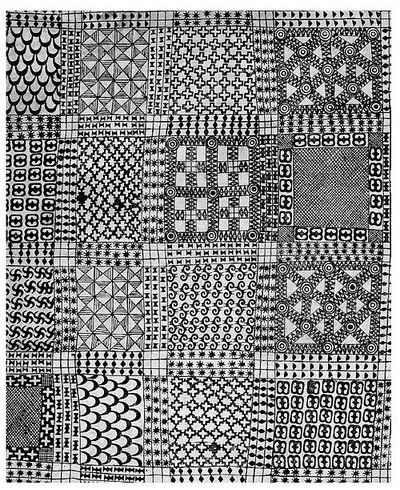
Adinkra symbols are among the most recognizable visual art forms to emerge from West Africa, yet their origins remain shrouded in the mists of early 19th-century warfare between the Gyaman and Ashanti kingdoms. Named after Nana Kwadwo Agyemang Adinkra, king of the Bono people of Gyaman (in present-day Cote d Ivoire), these symbols were adopted by the Ashanti after his defeat around 1818 for attempting to replicate the sacred Golden Stool. What began as mourning cloth stamps carved into calabash pieces and printed with badie bark dye has evolved into a globally recognized system of visual philosophy, appearing on everything from kente cloth borders to United Nations buildings, university logos, and contemporary fashion. Each of the over 80 documented symbols encodes a specific proverb, historical event, or philosophical concept: Gye Nyame ("except God") expresses the omnipotence of the Supreme Being; Sankofa ("go back and get it") teaches that one must learn from the past; Dwennimmen ("ram horns") signifies humility with strength. The village of Ntonso in the Ashanti Region remains the spiritual and practical home of Adinkra cloth-making, where artisans continue stamping cloth using techniques passed down through generations.
About This Book
"Adinkra: The Visual Philosophy of the Akan People" delves into the profound meaning and historical context of Adinkra symbols, a rich visual language developed by the Akan people of Ghana and Côte d'Ivoire. The book explores how these symbols, far from being mere decorations, encapsulate complex philosophical concepts, moral values, and historical narratives central to Akan society. The narrative begins with the story of Nana Kwadwo Agyeman Adinkra, the king of the Gyaman people, who is believed to have first developed these symbols. The book details his defeat by the Asante in the early 19th century and the subsequent adoption and adaptation of Adinkra by the Asante. The core of the book focuses on deciphering the meanings of individual Adinkra symbols. It meticulously explains how each symbol embodies a specific proverb, historical event, or social ideal. For example, "Gye Nyame" (except God) symbolizes the supremacy of God in all affairs, while "Mmere Dane" (times change) underscores the cyclical nature of life. The book analyzes how these symbols were traditionally used in cloth printing for royalty and ritual purposes, imbuing garments with layers of meaning. Beyond their aesthetic appeal, the book demonstrates how Adinkra served as a powerful form of non-verbal communication and a tool for preserving cultural memory. It shows how Adinkra cloths were worn during important ceremonies and funerals, communicating messages of mourning, respect, and remembrance. Furthermore, the book examines the enduring legacy of Adinkra, highlighting its transformation from a primarily royal and religious practice to a widespread symbol of Akan identity and a powerful emblem of African heritage globally. Readers will gain a deep appreciation for the intellectual depth and cultural significance embedded within these seemingly simple designs.
About the Author
While a single "author" may not be readily attributed to Adinkra scholarship in the Western sense, this field owes a great debt to generations of Akan oral historians, artisans, and community elders who have preserved and transmitted the knowledge associated with these symbols. Early documentation efforts by scholars like Robert Sutherland Rattray, in his work on Ashanti proverbs, laid foundational groundwork by collecting and translating the meanings associated with various symbols. Contemporary scholars such as Dr. Kwaku Ofori-Ansa and Dr. Boatema Boateng continue to build upon this legacy, exploring the semiotics, cultural context, and contemporary applications of Adinkra in their research. Their work, often drawing on extensive fieldwork and interviews with Akan artisans and community leaders, provides critical insights into the evolving meanings and significance of Adinkra in a globalized world. This ongoing tradition of research ensures the continued vitality and relevance of Adinkra as a vital form of cultural expression.
Key Themes
- Akan philosophy
- Visual communication
- Cultural memory
- Royal power
- Spiritual beliefs
- Symbolism
- Proverbs
Why This Matters
Adinkra's enduring significance lies in its embodiment of Akan philosophy and worldview. It provides a direct link to pre-colonial African intellectual traditions, showcasing the sophisticated systems of thought that thrived long before European contact. Understanding Adinkra is crucial for appreciating the richness and complexity of Ghanaian and African heritage, moving beyond simplistic narratives and engaging with authentic expressions of cultural identity.
For the diaspora, Adinkra serves as a powerful symbol of connection to ancestral roots. It offers a tangible way to reclaim and celebrate African heritage, fostering a sense of belonging and pride. Students, in particular, can benefit from studying Adinkra as a case study in African art, philosophy, and cultural history, learning to critically analyze and appreciate the diverse forms of knowledge production that exist beyond Western academic traditions. By engaging with Adinkra, readers can gain a deeper understanding of African intellectual history and its continued relevance in the modern world.
Historical and Cultural Context
Adinkra exists within a broader context of African visual systems, such as Nsibidi in Nigeria and Ethiopian illuminated manuscripts. These systems demonstrate the diversity and sophistication of African symbolic communication. Within the Sankofa Library, Adinkra connects to texts on Akan oral tradition and Asante history, providing a multi-faceted view of Akan culture and society. Exploring these related contexts reveals the interconnectedness of African knowledge systems and the importance of preserving and promoting these valuable cultural resources. This book enriches any understanding of Akan spirituality, social values and history.
Sources & References
- R.S. Rattray, Religion and Art in Ashanti (1927)
- Kwame Anthony Appiah, In My Father House (1992)
- Willis, W. Bruce, The Adinkra Dictionary (1998)
- Christaller, J.G., Dictionary of the Asante and Fante Language (1881)
- Arthur, G.F. Kofi and Rowe, Robert, Akan Symbols (1998)