Keyboard shortcuts
- J: Next chapter
- K: Previous chapter
- T: Toggle table of contents
- Shift+S: Share book
- +: Increase font size
- -: Decrease font size
- Escape: Close modals
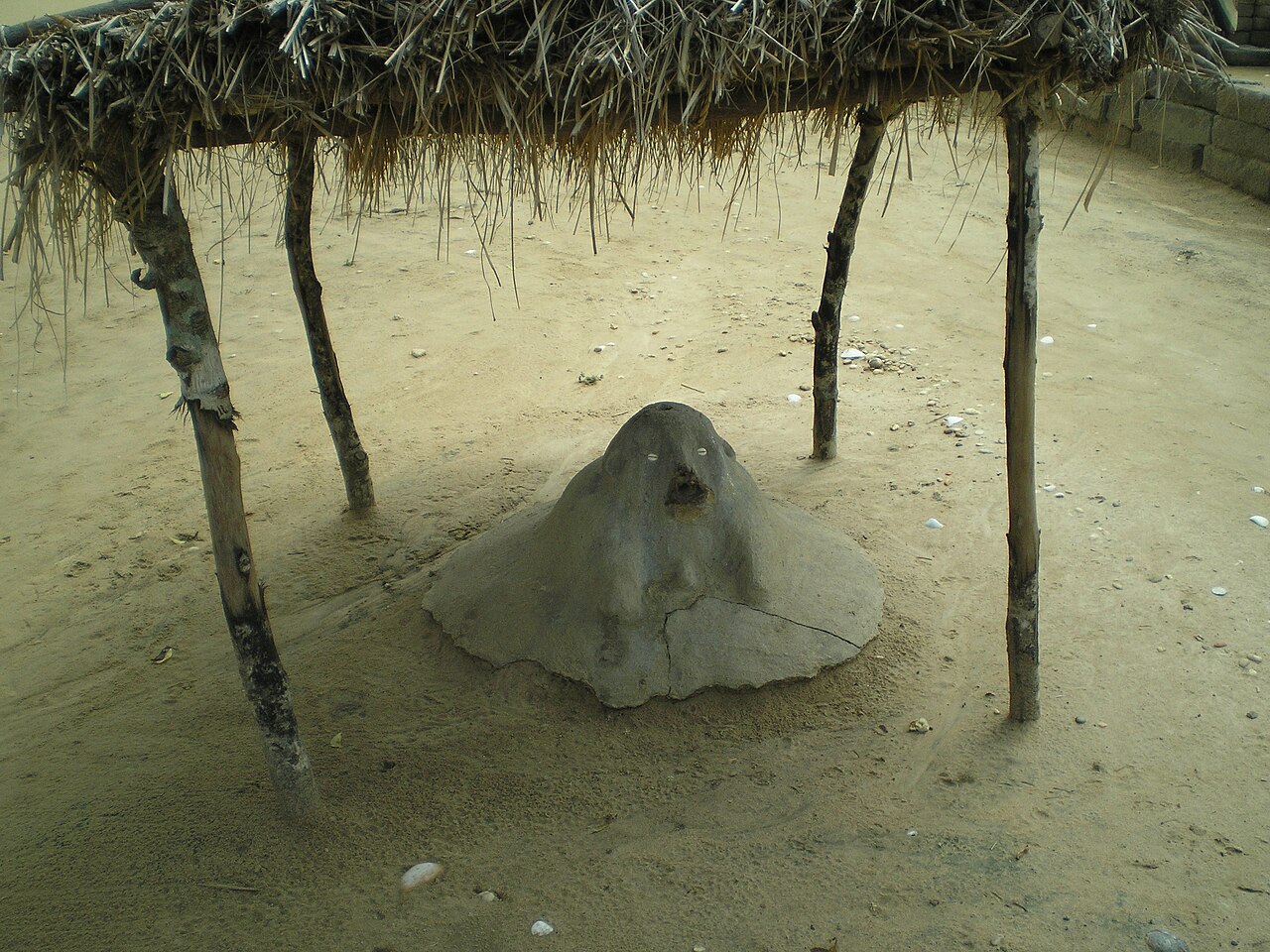
Cover: Own work CC0 via Wikimedia Commons
Echoes from the Volta: Unveiling Ewe Civilizations in Pre-Colonial Ghana
- Ewe
- Anlo
- Hogbetsotso
- Notse
- Vodun
- Migrations
- Oral History
- Adangbe
- Akan
- Dahomey
- Keta
- Slave Trade
Chapter 1
From Notse's Walls: The Genesis of Ewe Identity
The foundational narrative of the Ewe people is inextricably linked to the ancient city of Notse, located in present-day Togo. Oral traditions, meticulously passed down through generations, recount a harrowing exodus from this walled city, often placed between the late 15th and early 17th centuries. Under the tyrannical rule of King Agokoli, the Ewe people endured severe oppression, with tales of forced labor and walls built with human blood echoing through their history. This period of subjugation culminated in a strategic escape, masterminded by figures like Amega Wenya, who devised a method for the people to break through the city’s formidable clay walls by moistening them with water over time.
The migration from Notse was not a singular, unified movement but rather a series of dispersions by various Ewe subgroups, including the Anlo, Some, Aflao, and others, each seeking new lands and autonomy. As they journeyed westward, they carried with them their distinct cultural practices, spiritual beliefs, and the blueprint of their social organization. This arduous trek across diverse landscapes led them to settle in various locations, with the Anlo Ewe eventually establishing themselves along the coastal lagoons of what is now southeastern Ghana. This period of migration, though fraught with challenges, forged a resilient identity and a deep-seated value for freedom and self-determination that remains central to Ewe consciousness.
These early settlements, marked by their strategic locations near water bodies and fertile lands, became the nuclei of future Ewe states. The experience of Notse instilled in the Ewe a strong communal spirit and a preference for decentralized governance, where individual clans and towns maintained significant autonomy while recognizing a broader cultural kinship. The narrative of the Notse exodus is not merely a historical account; it is a powerful myth of origin, celebrated annually during the Hogbetsotso festival, which serves to reaffirm Ewe identity, commemorate their ancestors, and reinforce the bonds of community.
Sources & References
- Amenumey, D. E. K. (1986). The Ewe in Pre-Colonial Times. Sedco Publishing Limited.
- Nukunya, G. K. (1992). Tradition and Change in Ghana: An Introduction to Sociology. Ghana Universities Press.
- Greene, S. E. (2002). Sacred Sites and the Colonial Encounter: A History of Meaning and Memory in Ghana. Indiana University Press.
- Akyeampong, E. (2001). Between the Sea and the Lagoon: An Eco-Social History of the Anlo Ewe of Southeastern Ghana, c. 1850 to Recent Times. James Currey.