Keyboard shortcuts
- J: Next chapter
- K: Previous chapter
- T: Toggle table of contents
- Shift+S: Share book
- +: Increase font size
- -: Decrease font size
- Escape: Close modals
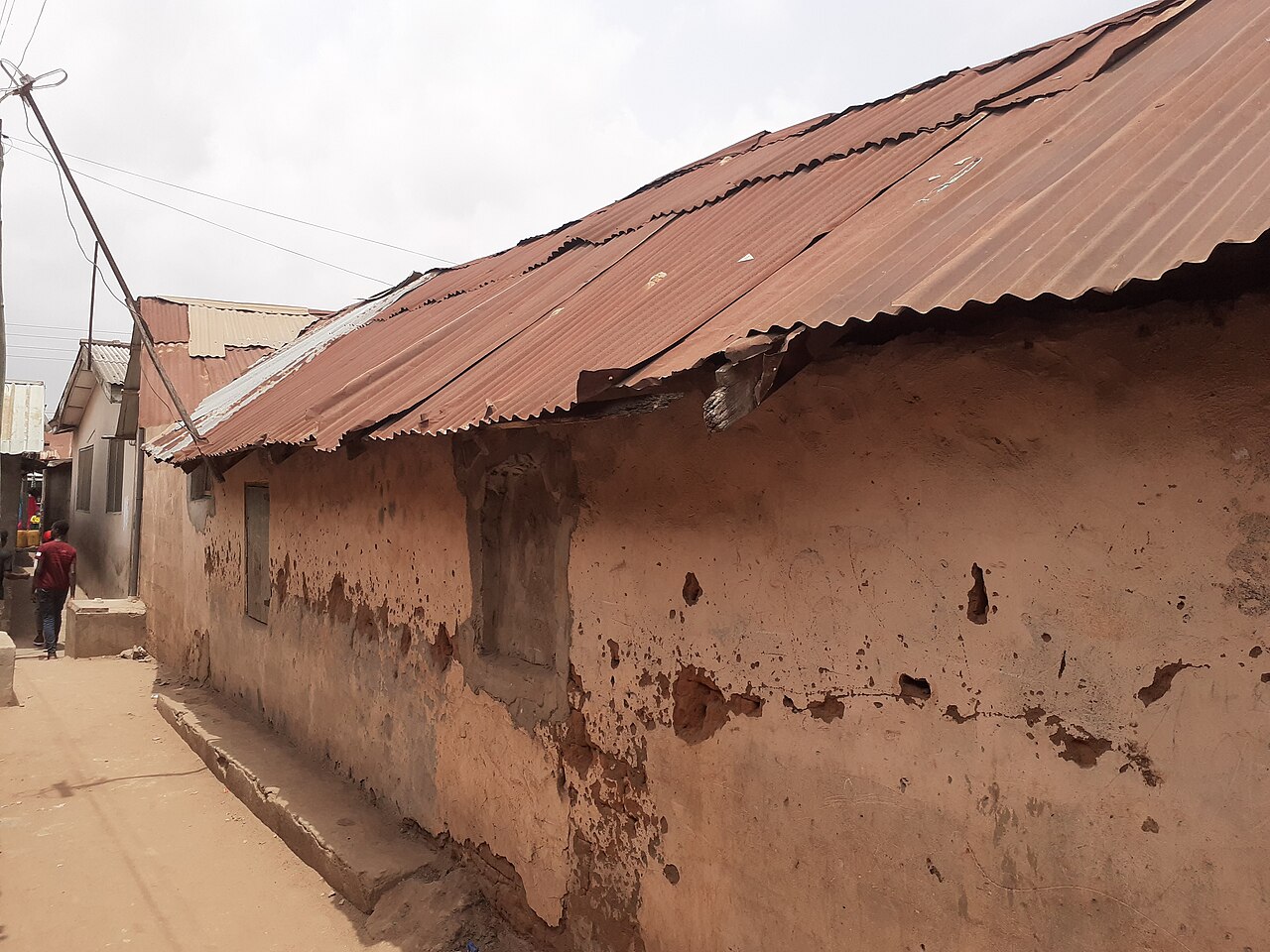
Cover: Own work CC BY-SA 4.0 via Wikimedia Commons
Children of the Stranger Quarter: The Zongo Communities, Muslim Migration, and the Making of Urban Ghana
↓Chapter 1
Part 1
### The Word Itself: What 'Zongo' Means and Why It Matters
The word 'Zongo' derives from the Hausa word for a temporary resting place or travelers' camp. In its earliest usage, it described the caravanserais where long-distance traders stopped to rest, pray, and exchange goods on the trans-Saharan and regional trade routes that crisscrossed West Africa. Over time, these temporary camps became permanent settlements, and the word evolved to describe the distinct Muslim neighborhoods found in nearly every major town and city across southern Ghana.
To understand the Zongo is to understand a fundamental truth about Ghana: it has never been a monoculture. Long before European colonists drew arbitrary borders, the forest kingdoms of the south and the savannah states of the north were connected by networks of trade, migration, and cultural exchange. The Zongo was the physical manifestation of this connection -- the place where north met south, where Islam encountered indigenous belief systems, and where Hausa, Mande, Mossi, Fulani, Yoruba, and dozens of other ethnic groups created something entirely new.
Today, Zongo communities exist in virtually every significant town in Ghana. Accra's Nima, Mamobi, and Newtown; Kumasi's Aboabo and Asawasi; Sekondi-Takoradi's New Takoradi; Cape Coast's Kotokuraba area -- these neighborhoods are home to millions of Ghanaians. Yet they remain among the most misunderstood and marginalized communities in the country, frequently associated in popular discourse with poverty, crime, and extremism rather than with their actual history of entrepreneurship, scholarship, and cultural creativity.
### Origins: The Trans-Saharan Connection and Early Muslim Traders (Pre-1700)
The presence of Muslims in what is now Ghana predates the arrival of Europeans by several centuries. Arab geographers and chroniclers from as early as the 11th century describe the gold trade emanating from the forests south of the Sahel, and Muslim traders were among the key intermediaries in this commerce.
The Mande-Dyula traders were among the first to establish permanent or semi-permanent communities in the Akan forest zone. These merchants, originating from the Mali and Songhai empires, followed the kola nut and gold trade routes southward. By the 15th and 16th centuries, Mande Muslim communities existed in Begho (near modern Wenchi), one of the great trading entrepots of pre-colonial West Africa. Begho was a cosmopolitan city where Mande Muslim traders (known locally as the Bron-Dyula or Ligby) lived alongside Akan populations, each community maintaining its distinct identity while participating in a shared commercial culture.
The Hausa traders came later, primarily in the 18th and 19th centuries, following established trade networks that linked the Hausa city-states of northern Nigeria (Kano, Katsina, Zaria) to the Gold Coast. These traders brought goods -- leather, natron, textiles, and Islamic learning materials -- in exchange for kola nuts, gold, and European manufactured goods that had arrived at the coast.
The Ashanti Empire, which rose to dominance in the early 18th century under Osei Tutu I and Opoku Ware I, actively encouraged Muslim traders to settle in Kumasi. The Asantehene recognized the economic and diplomatic value of these communities. Muslim scholars served as scribes, translators, and diplomatic advisors to the Ashanti court, using their literacy in Arabic and their connections to the wider Islamic world to facilitate trade and international relations. The Nkramo quarter in Kumasi (from the Akan word for Muslim) became one of the earliest formal Zongo settlements in the Ashanti heartland.
Key Themes
- migration
- Islam
- trade
- urban history
- cultural diversity
Why This Matters
The Zongo communities represent one of the most important yet underexplored stories in Ghanaian social history -- the centuries-long integration of Muslim migrant groups into the fabric of southern Ghanaian cities, creating unique cosmopolitan neighborhoods that defy simple ethnic or religious categorization.