Keyboard shortcuts
- J: Next chapter
- K: Previous chapter
- T: Toggle table of contents
- Shift+S: Share book
- +: Increase font size
- -: Decrease font size
- Escape: Close modals

Cover: Own work CC BY-SA 4.0 via Wikimedia Commons
Feeding the City, Remembering the Harvest: The Ga People and the Homowo Festival Traditions of Coastal Ghana
↓Chapter 1
Part 1
## A People of Coast, Lagoon, and Memory
The history of the Ga people is inseparable from the making of Accra, and the story of Accra is impossible to tell without the Homowo festival. Today Homowo is one of Ghana's most recognizable traditional celebrations, marked by drumming, processions, ritual food, twin ceremonies, and the sprinkling of kpokpoi. Yet its meaning is much deeper than spectacle. Homowo is a historical memory carried in ritual form. Its very name, commonly translated as “hooting at hunger,” recalls a time of famine, survival, and collective triumph. It is a public reminder that communities endure not because hardship never comes, but because institutions, kinship, labor, and belief help people outlast it.
The Ga are the Indigenous people of the Accra plains and adjoining coastal settlements. Over centuries they built towns, defended fishing grounds, traded with inland and overseas partners, shaped political authority through stools and priesthoods, and adapted to dramatic transformations brought by Atlantic commerce, colonial rule, Christianity, urbanization, and modern nationalism. Their language, Ga, belongs to the Kwa branch of the Niger-Congo family and developed in conversation with neighboring peoples including Akan, Ewe, Guan, and Dangme speakers. Ga identity therefore emerged not through isolation but through encounter, migration, and adaptation.
Oral traditions place the ancestors of different Ga groups in multiple migration streams. Some traditions link them to eastern movements from Yorubaland or Benin areas, while others emphasize the incorporation of earlier Guan-speaking communities already living on the Accra plains. Historians are careful here. Oral tradition preserves social memory, but not always a literal chronology. What is consistent is that by the fifteenth and sixteenth centuries, communities later understood as Ga had become firmly rooted along the coast and lagoons of what Europeans would call the Gold Coast. They organized settlements around lineages, ritual offices, war leadership, and trade routes connecting sea and hinterland.
The Accra plains were not an easy environment. Rainfall could be uncertain, and the balance between farming and fishing required skill. Millet and later maize mattered enormously. So did salt, livestock, and coastal exchange. Homowo's memory of hunger reflects a real ecological vulnerability. A failed season could threaten life itself. The festival grew from this precarious setting, turning agricultural uncertainty into a ritual drama of waiting, endurance, harvest, and communal thanksgiving.
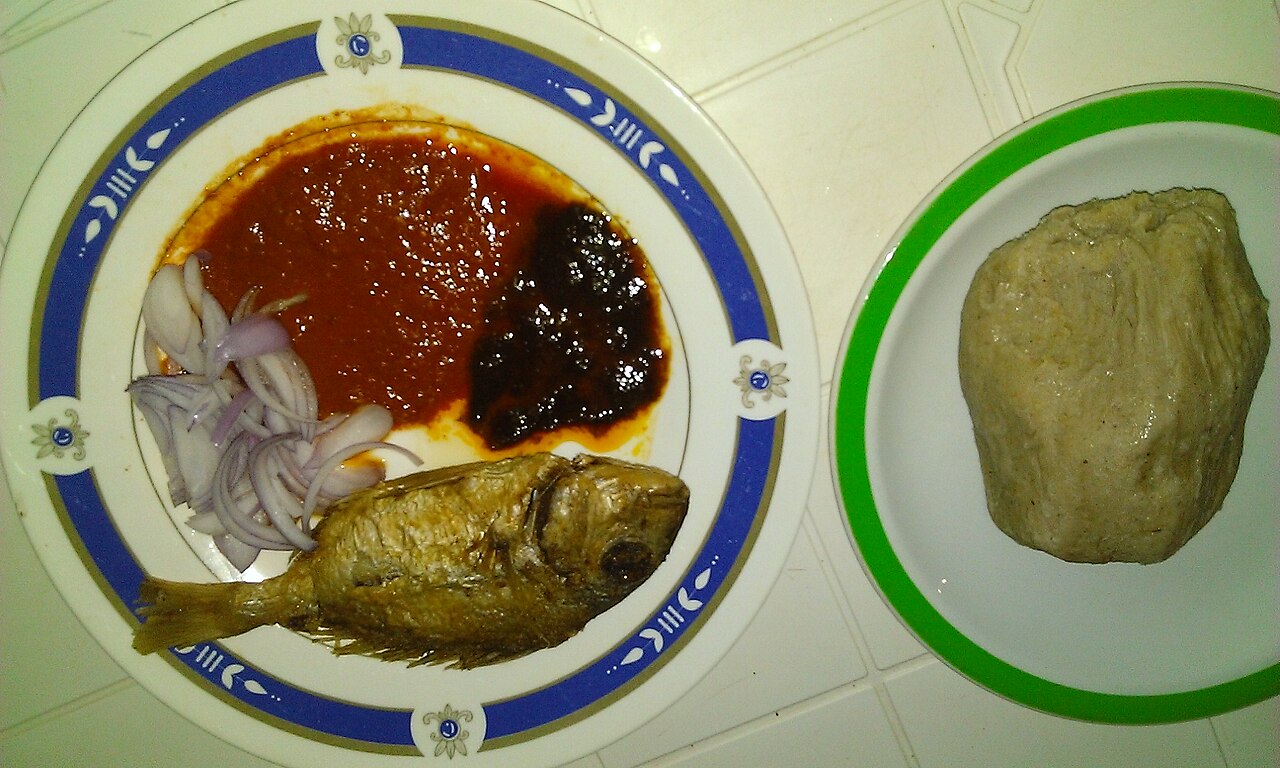
The centrality of food in Homowo is therefore historical, not decorative. Kpokpoi, the sacred mashed maize meal associated with the festival, embodies a moral lesson. The people once faced want, then returned to abundance. To prepare, bless, and share food is to remember dependence on rain, soil, sea, labor, and ancestors. Hunger is mocked because it did not prevail.
## Towns of the Ga State System
About This Book
This book follows the history of the Ga from the coast and lagoon settlements around present-day Accra to the modern capital city, showing how Homowo became one of Ghana's most important festivals of memory and renewal.
Key Themes
- Ga people
- Homowo
- Accra
- festivals
- coastal Ghana
- oral tradition
- chieftaincy
Why This Matters
The history of the Ga and Homowo helps explain Accra itself -- its language, neighborhoods, ritual calendar, authority structures, and the link between food, memory, and survival in Ghanaian cultural life.
Historical and Cultural Context
Connects to Ghana's coastal trade, colonial urban growth, chieftaincy, fishing communities, and festival culture.