Keyboard shortcuts
- J: Next chapter
- K: Previous chapter
- T: Toggle table of contents
- Shift+S: Share book
- +: Increase font size
- -: Decrease font size
- Escape: Close modals

Chapter 1
The Mortar and the Pestle: Fufu and the Akan Culinary Foundation
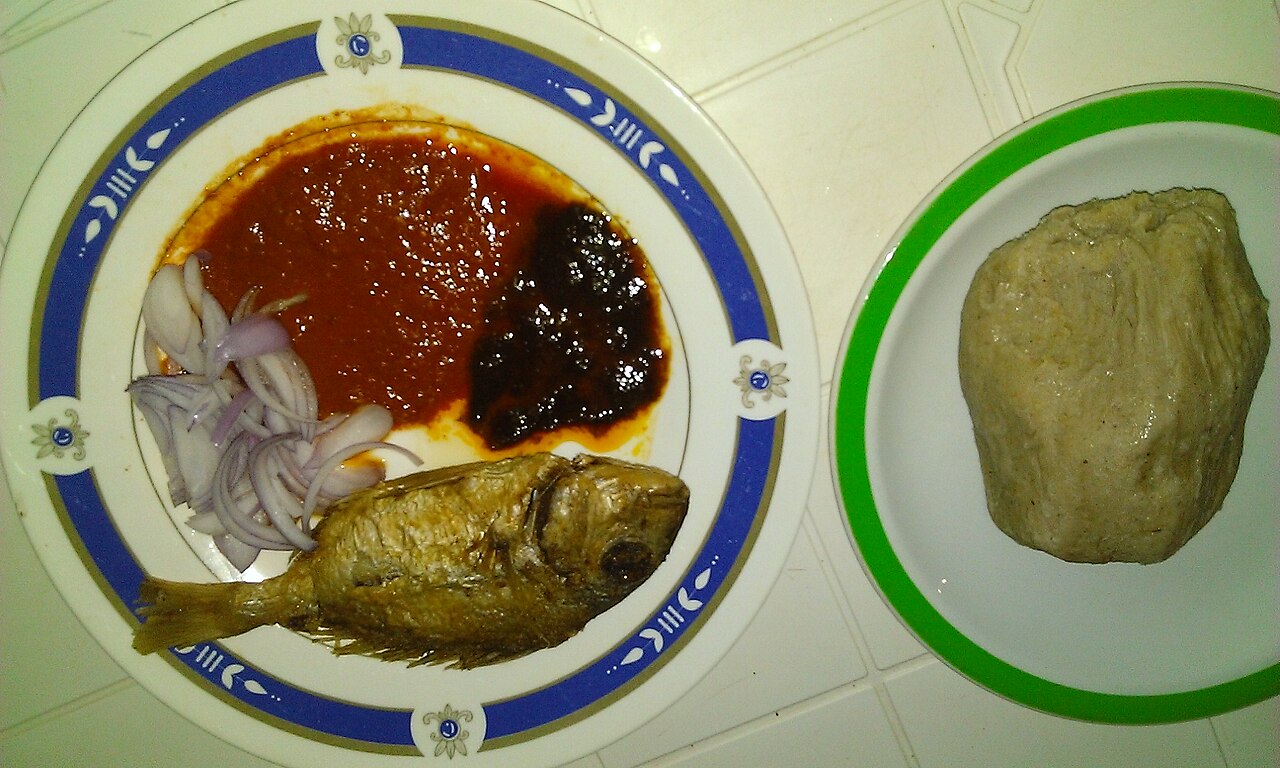
In every Akan household across southern Ghana, the rhythmic thud of wooden pestle against mortar is the heartbeat of the kitchen. Fufu, the starchy staple that defines Akan cuisine, is made by pounding boiled cassava and plantain (or yam and plantain, or cocoyam) in a carved wooden mortar called a waduro, using a tall pestle called a woma. The process requires two people working in synchrony: one pounds while the other turns the dough with wet hands between strokes, a choreography so precise that a mistimed turn means a broken finger. The Asante, Fante, Akuapem, Akyem, Bono, and Guan peoples each claim variations, but the essential technique is ancient, predating European contact by centuries.
The word "fufu" is onomatopoeic, mimicking the soft thud of the pestle. Portuguese traders arriving on the Gold Coast in the 15th century recorded pounded starch dishes among coastal peoples, and the 17th-century Dutch merchant Willem Bosman described Akan meals built around starchy mounds served with soups in his 1705 "A New and Accurate Description of the Coast of Guinea." The dish travelled with the transatlantic slave trade: fufu variants survive today in Cuba (fufú de plátano), Puerto Rico, the Dominican Republic, and Brazil, a culinary thread connecting the African diaspora to its origins.
Fufu is never eaten alone. It is the vehicle for Ghana's extraordinary soup tradition: groundnut soup (nkate nkwan), palm nut soup (abɛnkwan), light soup (nkrakra) with tomatoes and chili, and the rich, dark kontomire stew made from cocoyam leaves. Each soup carries regional identity. The Fante favour palm nut soup with crab and fish; the Asante prefer groundnut soup with goat or bushmeat; the Brong add dawadawa (fermented locust bean) for umami depth. The soup is where the cook's artistry lives, and recipes are passed matrilineally, from grandmother to mother to daughter.
The etiquette of eating fufu is itself a cultural education. It is eaten with the right hand only, pinched into small balls, dipped in soup, and swallowed without chewing, a practice that baffles outsiders but is central to the experience. As the Akan proverb teaches, "Fufu is not chewed; it is the soup that carries the story." At funerals, naming ceremonies, and festivals, fufu is the prestige dish, its preparation a communal act that binds families and reinforces social bonds. When an Akan person says "I am going to eat" (merekɔ didi), the implied meal is fufu. Everything else is a snack.
About This Book
"From Fufu to Jollof Wars: Food, Identity, and the Culinary Soul of Ghana" delves into the rich tapestry of Ghanaian cuisine, exploring its evolution from pre-colonial times to the present day. This book argues that food in Ghana is far more than sustenance; it's a powerful symbol of cultural identity, social cohesion, and historical memory. The narrative begins by examining indigenous ingredients and cooking techniques prevalent before European contact. We explore how crops like yams, plantains, and cocoyams formed the basis of diets across various ethnic groups, from the Akan to the Ga-Adangbe and Ewe. Specific dishes like *fufu*, pounded yam or plantain, are analyzed for their ritual significance and variations across different regions. The book dedicates significant attention to the impact of the transatlantic slave trade and colonialism on Ghanaian foodways. The introduction of new crops like maize, cassava, and tomatoes from the Americas dramatically altered traditional diets, creating hybrid dishes and influencing cooking styles. The book examines how enslaved Africans carried culinary traditions across the Atlantic, contributing to the development of distinct African diaspora cuisines. The colonial period witnessed the marginalization of indigenous foods and the imposition of European culinary norms, prompting a resistance that manifested in the persistence and celebration of traditional dishes. A key section focuses on the emergence of iconic Ghanaian dishes like *kenkey*, *waakye*, and, of course, *jollof rice*. The book dissects the "Jollof Wars" phenomenon, not merely as a lighthearted competition, but as a complex negotiation of national identity and cultural pride between Ghana, Nigeria, and other West African nations. The story culminates with an examination of Ghana's vibrant street food culture, analyzing its role in urban economies, social interactions, and the preservation of culinary heritage. The book reveals the culinary ingenuity of Ghanaian women and the role of the market woman in the food trade.
About the Author
The study of Ghanaian foodways draws on a diverse body of scholarship. Oral traditions, passed down through generations, are a crucial source of knowledge, particularly about pre-colonial food practices and rituals. Contemporary ethnographic research, like that conducted by Dr. Ama Ata Aidoo in her writings on cultural preservation, helps capture current food trends and the experiences of everyday Ghanaians. Furthermore, historians like Professor Kwasi Anokye's work on pre-colonial Akan social structures and agricultural practices contribute immensely. These scholars highlight the importance of interdisciplinary approaches, combining historical analysis, anthropology, and culinary studies to fully understand the significance of food in shaping Ghanaian identity. Contemporary food bloggers and chefs also play a vital role in documenting and promoting Ghanaian cuisine.
Key Themes
- Cultural Identity
- Colonialism and Food
- Culinary Innovation
- Gender and Food
- Regional Variations
- Food Security
- The Jollof Wars
Why This Matters
Understanding Ghanaian cuisine provides invaluable insights into the nation's history, culture, and social fabric. Food serves as a tangible link to the past, preserving traditions and memories that have been passed down through generations. This topic is particularly relevant for the Ghanaian diaspora, offering a means of reconnecting with their heritage and fostering a sense of belonging. By exploring the stories behind dishes like *fufu* and *jollof*, readers can gain a deeper appreciation for the resilience, creativity, and cultural richness of Ghanaian society. Moreover, studying Ghanaian foodways allows us to critically examine the impact of colonialism on local diets, fostering discussions about food sovereignty and sustainable agriculture. Students can utilize this knowledge to promote food-related initiatives or conduct further research on the fascinating world of African cuisine.
Historical and Cultural Context
The story of Ghanaian cuisine is intricately linked to broader narratives of West African history and the transatlantic slave trade. The Columbian Exchange, which saw the movement of plants and animals between the Old and New Worlds, had a profound impact on food cultures across the continent. Dishes like *akara*, bean cakes, demonstrate clear links to similar foods in Brazil and the Caribbean, highlighting the shared culinary heritage of the African diaspora. Furthermore, this topic connects to the Sankofa Library's broader collection of materials on African agriculture, trade, and cultural exchange.