Keyboard shortcuts
- J: Next chapter
- K: Previous chapter
- T: Toggle table of contents
- Shift+S: Share book
- +: Increase font size
- -: Decrease font size
- Escape: Close modals
Chapter 1
Part 1
The story of Kente cloth, Ghana's most celebrated textile, is a vibrant tapestry woven with threads of history, royalty, and profound cultural symbolism. More than just a fabric, Kente is a visual language, an archive of Asante and Ghanaian identity, embodying philosophical concepts, historical events, and the very soul of a nation. Its intricate patterns and dazzling colors speak volumes, narrating tales passed down through generations, making each piece a living document of heritage.
The origins of Kente weaving are deeply rooted in the Ashanti Region of Ghana, particularly within the small, historically significant town of Bonwire, located approximately 18 kilometers northeast of Kumasi. Oral traditions, meticulously preserved and recounted by the elders of Bonwire, attribute the invention of Kente weaving to two friends, Ota Karaban and Kwaku Ameyaw, who lived in the village of Bonwire in the late 17th or early 18th century. The legend tells of their encounter with a spider, Ananse, meticulously spinning its intricate web. Fascinated by the spider's artistry and the geometric precision of its creation, they painstakingly studied its technique, later replicating it using raffia fibers. Their initial attempts, though rudimentary, laid the foundation for what would become Kente.
News of their innovative textile soon reached the ears of Nana Osei Tutu I, the first Asantehene, who reigned from approximately 1680 to 1717. Recognizing the potential of this unique fabric to symbolize the power, prestige, and sophistication of the burgeoning Asante Empire, he commissioned Ota Karaban and Kwaku Ameyaw to weave a special cloth exclusively for him. This royal patronage elevated Kente from a simple craft to a revered art form, establishing Bonwire as the official weaving center for the Asantehene and the Ashanti royal court. Initially, the cloth was called "nwentoma," meaning "woven cloth," and its use was strictly reserved for the Asantehene, paramount chiefs, and members of the royal family during significant state occasions, durbars, and religious ceremonies. This exclusivity underscored its sacred and regal status, making it a powerful visual marker of authority and spiritual connection.
About This Book
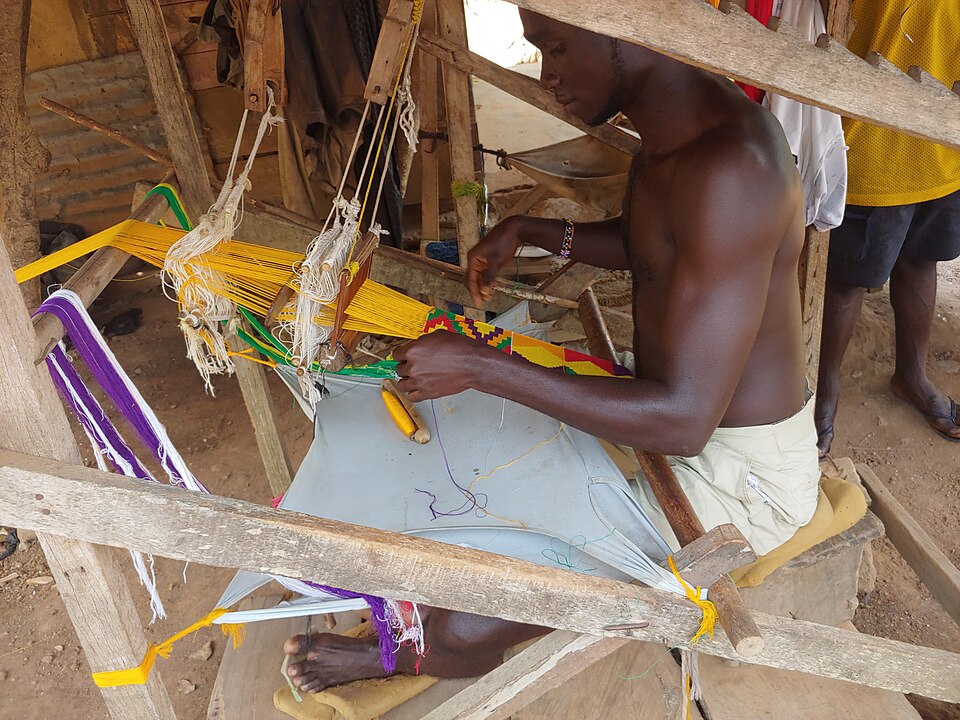
"Kente Cloth: The Woven History of Ghana" offers a compelling exploration of Kente's multifaceted role in shaping Asante and Ghanaian identity, from its genesis to its contemporary global recognition. The article meticulously unravels the legendary tale of Kente's origins, centered in Bonwire, the acknowledged home of Kente weaving. It recounts the story of two brothers, Ota Kraban and Kwaku Amoako, who, inspired by observing a spider spinning its web, meticulously replicated the intricate designs, thus creating the first Kente cloth. The article will examine the weaving techniques employed, moving from the traditional narrow strip weaving on horizontal looms to the more contemporary adaptations. The book then investigates the profound symbolism interwoven into the colors and patterns of Kente. Readers will learn how each color -- gold representing royalty and wealth, green symbolizing growth and renewal, red signifying passion and spiritual intensity, black embodying mourning and ancestral connection, and white denoting purity and festivity -- carries distinct meanings deeply rooted in Asante cultural values and Akan philosophy. Similarly, the intricate patterns, given names referencing proverbs, historical events, or philosophical concepts, convey specific messages and values. We will showcase examples of notable patterns like "Adweneasa" (my skills are exhausted), worn by royalty and signifying exceptional craftsmanship, and "Fathia Fata Nkrumah" (Fathia is suitable for Nkrumah), a pattern designed to commemorate Kwame Nkrumah's marriage. The study also explores Kente's evolution from its exclusive association with Asante royalty to its current status as a national symbol and a global emblem of African heritage. Originally reserved for Asantehene and other dignitaries, Kente was carefully regulated to maintain its prestige. The article chronicles how Kente gradually became accessible to wider segments of society, particularly after Ghanaian independence, as it became a symbol of national pride and cultural identity. The book follows its global journey, tracing its adoption by African diasporic communities as a signifier of cultural connection and its incorporation into various facets of contemporary fashion and art worldwide.
About the Author
The study of Kente cloth has been shaped by generations of Ghanaian scholars, artisans, and cultural custodians. Early documentation relied heavily on oral traditions passed down within weaving families, particularly in Bonwire. Contemporary scholarship builds upon this foundation, incorporating perspectives from art history, anthropology, and textile studies. Key figures include Dr. Boatema Boateng, whose work examines the cultural economics of Kente, and Nana Kwasi Boateng, a master weaver whose expertise preserves traditional techniques. This article draws on these rich sources, aiming to synthesize scholarly analysis with the lived experiences of Kente weavers and wearers, ensuring a comprehensive and nuanced understanding of this iconic cloth. Research institutions like the Kwame Nkrumah University of Science and Technology (KNUST) also contribute significantly to the preservation and study of Kente through their textile design departments.
Key Themes
- Asante Royalty
- Cultural Symbolism
- Textile Production
- National Identity
- Global Heritage
Why This Matters
Kente cloth transcends its material form to embody the very essence of Ghanaian identity and African heritage. Its significance lies in its ability to communicate complex cultural values, historical narratives, and philosophical beliefs through its intricate designs and colors. Understanding Kente offers invaluable insights into the rich tapestry of Asante culture and the broader context of African art and craftsmanship.
For the diaspora, Kente serves as a tangible link to ancestral roots, a powerful symbol of connection to the African continent. For students, engaging with the story of Kente provides a unique opportunity to explore themes of cultural identity, artistic expression, and historical continuity. Moreover, studying Kente allows us to appreciate the ingenuity and creativity of African artisans and to challenge Eurocentric narratives that often marginalize African contributions to global culture. Its story reminds us of the power of cloth as a medium for cultural expression and historical memory.
Historical and Cultural Context
Kente's story is interwoven with the broader history of West African textile traditions, including the strip-woven cloths of the Ewe people and the indigo-dyed textiles of Nigeria. Its prominence also reflects the importance of trade and diplomacy in pre-colonial Asante society. As part of the Sankofa Digital Heritage Library, Kente connects to other entries on Asante political structures, Akan religious beliefs, and the history of resistance to colonial rule. The cloth's narrative of cultural preservation and adaptation mirrors similar stories throughout the African diaspora, offering a powerful testament to the enduring strength of African cultural traditions.
Sources & References
- Akyeampong, E. (2006). Themes in West Africa History. James Currey.