Keyboard shortcuts
- J: Next chapter
- K: Previous chapter
- T: Toggle table of contents
- Shift+S: Share book
- +: Increase font size
- -: Decrease font size
- Escape: Close modals
Chapter 1
Part 1
The narrative of the Ashanti nation, a formidable power that once dominated significant portions of present-day Ghana and beyond, is inextricably linked to two pivotal figures: Osei Tutu, its first Asantehene, and Okomfo Anokye, the legendary priest and statesman. Their partnership, forged in the crucible of late 17th century West Africa, culminated in an act of profound spiritual and political significance, the conjuring of the Golden Stool, known in Twi as the Sika Dwa Kofi. This sacred object became, and remains, the very soul of the Ashanti people, embodying their unity, strength, and destiny.
Before the rise of the Ashanti Confederacy, the Akan-speaking peoples of the forest belt were organized into numerous independent chiefdoms, often in competition or subjugation. Among these, the Denkyira kingdom had emerged as a dominant force, exacting tribute and imposing its will on its neighbors, including the Oyoko clan settlements around what would become Kumasi. It was into this fragmented and often oppressive environment that Osei Tutu, a scion of the Oyoko royal family, emerged as a transformative leader. Having spent time in exile in Akwamu, a powerful state to the east, he gained invaluable insights into military organization, statecraft, and the art of governance. Upon his return to his ancestral lands, around 1680, he set about consolidating power, but he understood that military prowess alone would not suffice to forge a lasting nation. A deeper, unifying spiritual foundation was required.
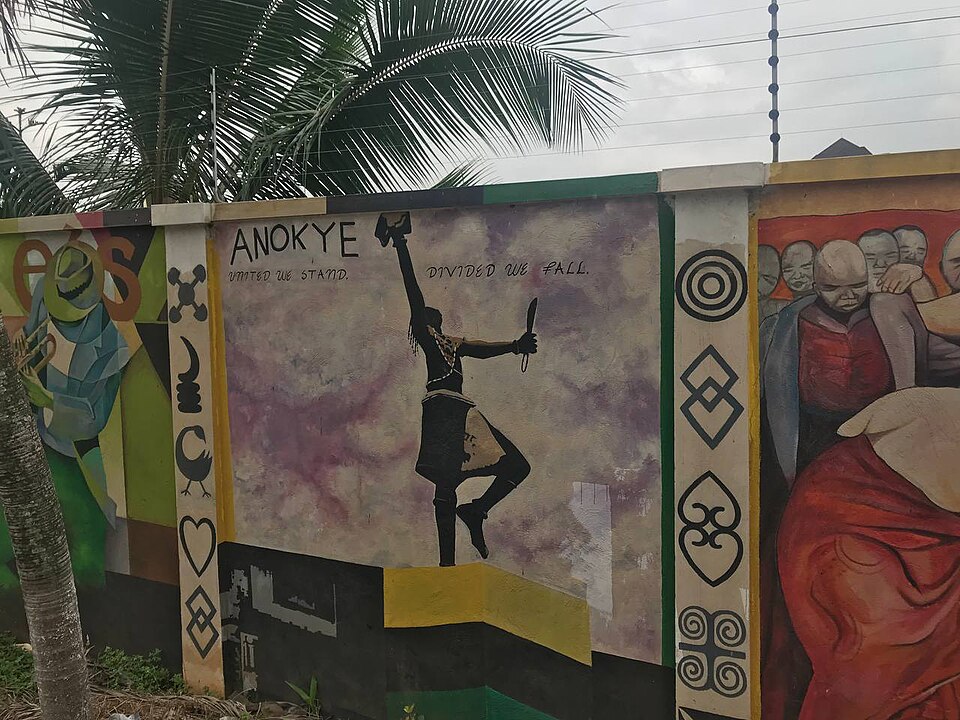
This is where Okomfo Anokye, a figure shrouded in myth and revered as a seer and miracle worker, entered the historical stage. Born in Awukugua, in the Akuapem hills, Anokye's early life is said to have been marked by extraordinary events and spiritual insight. He is believed to have been a maternal uncle to Osei Tutu, or at least a close confidant and spiritual advisor of immense influence. Anokye's arrival in Kumasi, the burgeoning capital of Osei Tutu's domain, marked the beginning of a revolutionary period. He was not merely a priest; he was a political architect, understanding the psychological power of shared belief and sacred symbols.
About This Book
“Okomfo Anokye and the Golden Stool” delves into a pivotal narrative in Ghanaian history: the creation of the Ashanti Kingdom and the central role of the Golden Stool, Sika Dwa Kofi, as its embodiment. The book meticulously recounts the pre-Ashanti period, marked by fragmented Akan states often at odds with one another. It highlights the visionary leadership of Osei Tutu, who recognized the need for unity to safeguard their collective future. The central focus is the legendary figure of Okomfo Anokye, the high priest and advisor whose mystical prowess is credited with conjuring the Golden Stool in Kumasi. The book details the significance of this event -- not simply as a feat of magic, but as a carefully orchestrated act of political and spiritual unification. The Sika Dwa Kofi, believed to house the soul (sunsum) of the Ashanti people, served as the ultimate symbol of allegiance, effectively binding the disparate states under a single banner. The narrative explores the symbolism embedded in the Stool's design and materials, linking it to Ashanti cosmology and concepts of kingship. Furthermore, the book charts the expansion of the Ashanti Kingdom under Osei Tutu and his successors, illustrating how the unifying force of the Golden Stool enabled military successes and the establishment of a sophisticated political structure. It also addresses the challenges faced by the kingdom, particularly during the colonial era, emphasizing the Ashanti people’s unwavering determination to protect the Golden Stool at all costs. The Anglo-Ashanti Wars are examined through the lens of the Stool's importance, culminating in the Yaa Asantewaa War of Independence, fueled by the British attempt to seize the Stool. Finally, the book explores the continued veneration of the Golden Stool in modern-day Ghana, underscoring its enduring importance as a symbol of Ashanti identity, unity, and cultural resilience. The reader will gain a deep understanding of Ashanti political organization, spiritual beliefs, and resistance to colonialism.
About the Author
The knowledge surrounding Okomfo Anokye and the Golden Stool is deeply rooted in Ashanti oral tradition, passed down through generations by bards (akomfo) and elders. Early European accounts, while offering glimpses into Ashanti society, are often tinged with colonial biases. Significant contributions to our understanding come from anthropologists and historians who engaged directly with Ashanti communities. Figures such as Captain R.S. Rattray, whose works like "Ashanti" (1923) provide detailed ethnographic insights, are crucial. More recent scholarship by Ghanaian historians like Ivor Wilks, whose works explore Ashanti political structures and economic history, and Kwame Arhin, who focused on chieftaincy and traditional governance, have offered invaluable perspectives, challenging earlier colonial narratives and centering Ashanti voices. This book draws upon both the rich oral traditions and rigorous academic research that have shaped our understanding of this foundational story.
Key Themes
- Spiritual Power
- Political Unification
- Cultural Identity
- Resistance to Colonialism
- Kingship and Governance
- Oral Tradition
- Symbolism
Why This Matters
The story of Okomfo Anokye and the Golden Stool is of paramount importance for understanding Ghanaian and African heritage because it embodies the power of cultural symbols in shaping national identity and fostering collective resistance. It highlights the ingenuity of pre-colonial African political systems and their capacity to unite diverse communities. The Golden Stool transcends its material form, representing the soul and continuity of the Ashanti people -- a testament to the enduring strength of African spiritual beliefs.
For the diaspora, this narrative offers a powerful connection to their ancestral roots, revealing the sophisticated political and spiritual traditions of their forebears. For students, it provides a compelling case study in pre-colonial African history, illustrating the complex interplay between religion, politics, and culture. Engaging with this story is crucial for decolonizing our understanding of African history, moving beyond stereotypical narratives of victimhood and recognizing the agency and resilience of African societies in the face of adversity.
Historical and Cultural Context
The creation of the Ashanti Kingdom resonates with other examples of state formation in pre-colonial Africa, such as the rise of the Zulu Kingdom under Shaka Zulu or the consolidation of the Sokoto Caliphate in West Africa. All these examples demonstrate the ability of African leaders to forge powerful political entities through a combination of military prowess, diplomacy, and the strategic use of cultural symbols. Within the Sankofa Library, this book complements narratives about other significant African kingdoms and resistance movements, providing a broader understanding of the continent's rich and diverse history before European colonization. The story of the Golden Stool also connects to broader themes of African spirituality and its enduring influence on cultural identity.
Sources & References
- Akyeampong, E. (2006). Themes in West Africa History. James Currey.