Keyboard shortcuts
- J: Next chapter
- K: Previous chapter
- T: Toggle table of contents
- Shift+S: Share book
- +: Increase font size
- -: Decrease font size
- Escape: Close modals
Chapter 1
The Gold and the Greed: European Arrival on the Gold Coast (1471-1637)
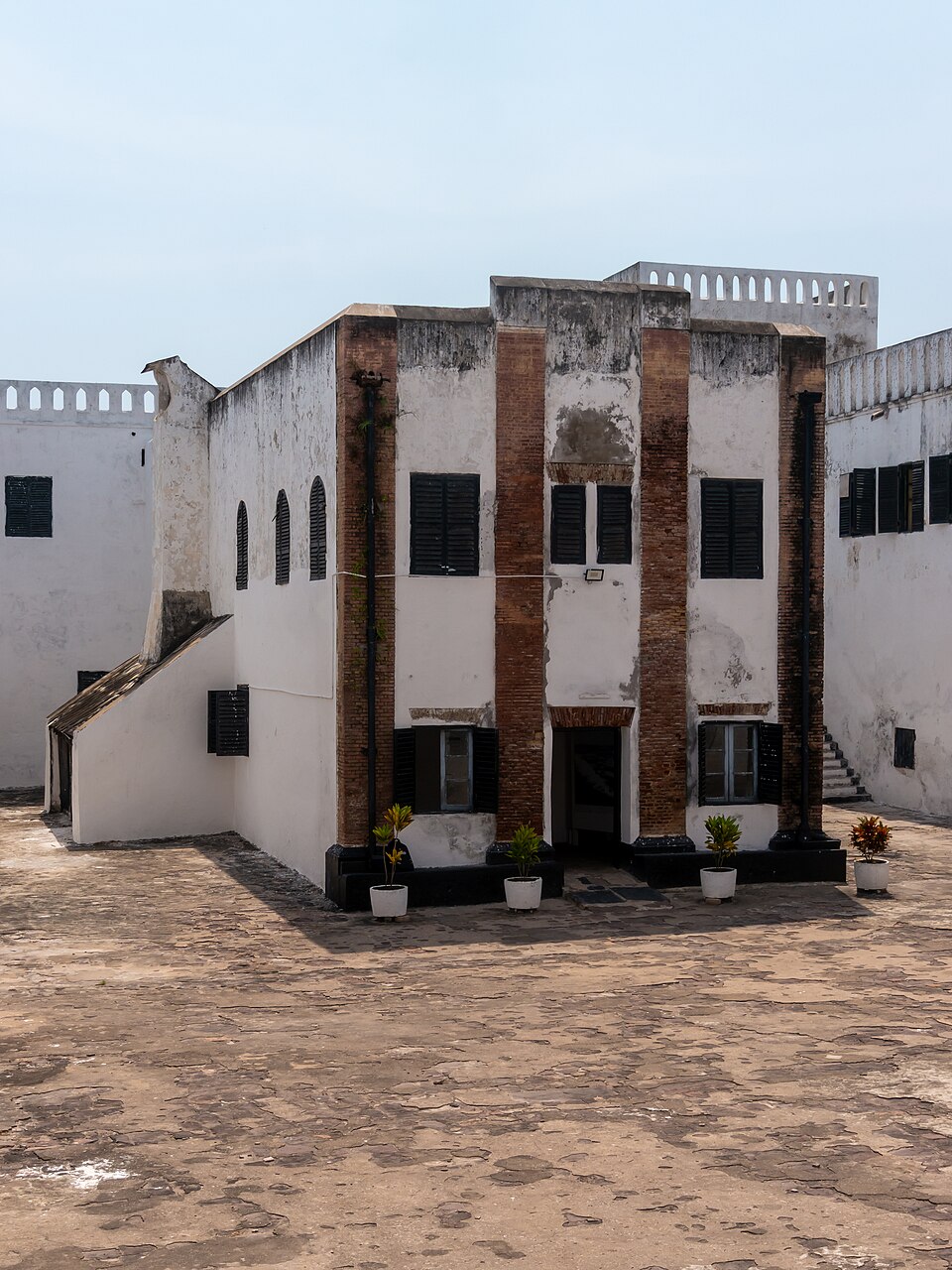
On January 19, 1482, a Portuguese fleet of ten caravels and two transport ships carrying 600 soldiers, 100 masons, and pre-cut stone from Portugal anchored at a rocky promontory on the Gold Coast. Captain Diogo de Azambuja had been dispatched by King João II to build the first permanent European structure in sub-Saharan Africa: São Jorge da Mina, which the world would come to know as Elmina Castle. The site had been identified by navigators João de Santarém and Pedro Escobar, who reached the coast in 1471 and found such abundant gold that they named it 'A Mina' — the Mine.
The Portuguese extracted an estimated 24,000 ounces of gold annually from the region by the early 1500s (historian John Vogt's calculation), establishing Elmina as the most profitable trading post in the Portuguese maritime empire. A chapel added in 1503 became the first Christian church in tropical Africa. But the lucrative gold trade soon attracted rivals. The Dutch West India Company (WIC), flush with capital from Amsterdam's financial markets, laid siege to Elmina in 1637. After a bombardment from the nearby hill of St Jago, the Portuguese garrison of 35 men surrendered to Colonel Hans Coningck on August 29, ending 155 years of Portuguese control. The Dutch immediately began converting the castle's lower chambers into slave dungeons, marking the Gold Coast's transition from gold to human cargo.
By the mid-17th century, seven European nations — Portugal, the Netherlands, Britain, Denmark, Sweden, Brandenburg-Prussia, and France — had built or captured fortifications along just 500 kilometres of coastline. No comparable concentration of European military architecture existed anywhere else in Africa, a testament to the Gold Coast's extraordinary economic significance.
About This Book
"Slavery and the Castles of the Gold Coast" meticulously charts the harrowing transformation of coastal fortifications from centers of commerce to epicenters of the transatlantic slave trade. The narrative begins with the arrival of the Portuguese in the late 15th century and the construction of Elmina Castle in 1482, initially a strategic trading post for gold, ivory, and other resources. The article traces how, over the next two centuries, the dynamics shifted dramatically as European powers -- including the Dutch, British, Danes, and Swedes -- vied for control of the Gold Coast and its lucrative trade routes. This competition fueled the expansion of the slave trade, as these powers built or seized forts and castles along the coast, each becoming a crucial link in the horrifying chain of human trafficking. The article details the internal architecture and function of these castles, such as Cape Coast Castle and Elmina. It exposes the stark contrast between the opulent living quarters of the European traders and the horrific dungeons where enslaved Africans were held in inhumane conditions, often for months, awaiting transport across the Atlantic. It explains the brutal mechanics of the trade, including the system of "door of no return," which marked the final departure point for millions. Further, it explores the intricate network of collaboration and resistance between European traders and local African societies. Some African kingdoms, motivated by economic gain or inter-tribal warfare, participated in the trade, while others fiercely resisted European encroachment and the enslavement of their people. The article culminates by examining the legacy of slavery on Ghanaian society -- its impact on demographics, social structures, and cultural identity -- and discusses the modern significance of these castles as UNESCO World Heritage Sites, monuments of remembrance, and places of pilgrimage for the African diaspora seeking to connect with their heritage. Ultimately, the article paints a somber yet essential portrait of a dark chapter in human history.
About the Author
The history of slavery on the Gold Coast is not attributed to a single author but is rather the product of generations of dedicated scholarship. Historians such as Kwame Yeboa Daaku, author of "Trade and Politics on the Gold Coast, 1600-1720," illuminated the complex interactions between European traders and African societies. Similarly, Albert van Dantzig's work on Dutch involvement in the slave trade provides essential insights into the inner workings of the forts and trading companies. More contemporary scholars like Robin Blackburn, author of "The Making of New World Slavery," contribute broader comparative perspectives that situates the Gold Coast within the global context of the transatlantic trade. Additionally, oral traditions and local historical narratives passed down through generations of Ghanaians have been crucial in shaping our understanding of this period, providing counter-narratives to the dominant European accounts. This article builds upon this rich tradition of scholarship, drawing from diverse sources to offer a nuanced and comprehensive account of slavery and the castles of the Gold Coast.
Key Themes
- Transatlantic slave trade
- European colonialism
- African resistance
- Fortifications and architecture
- Impact on Ghanaian society
- UNESCO World Heritage
- Memory and remembrance
Why This Matters
Understanding the history of slavery on the Gold Coast is paramount for comprehending Ghanaian and African heritage. The castles stand as stark reminders of a brutal past, a past that continues to shape social, political, and economic realities in Ghana and throughout the diaspora. The legacy of slavery is interwoven with issues of race, inequality, and historical trauma, demanding critical engagement and open dialogue.
For the African diaspora, these castles are not simply tourist attractions; they are ancestral ground, places of profound spiritual and emotional significance. Visiting them offers an opportunity to connect with their heritage, to honor the resilience of their ancestors, and to reflect on the enduring impact of the transatlantic slave trade. Students, too, must engage with this history to develop a nuanced understanding of colonialism, the complexities of power dynamics, and the ongoing struggle for justice and equality. By confronting the past, we can work towards a more equitable and just future, ensuring that the lessons of history are never forgotten.
Historical and Cultural Context
The history of slavery on the Gold Coast must be understood within the broader context of African history. Before the arrival of the Europeans, various forms of slavery existed within African societies, often distinct from the chattel slavery that characterized the transatlantic trade. The rise of powerful empires like the Asante, with their complex social and political structures, played a significant role in shaping the dynamics of the trade. Furthermore, placing this narrative within the Sankofa Digital Heritage Library allows for connections to be drawn with other related topics, such as the history of resistance movements, the cultural impact of the diaspora, and the ongoing efforts to preserve and promote African heritage. This enriched context provides a more comprehensive and nuanced understanding of this complex historical period.
Sources & References
- Van Dantzig, Albert (1999). Forts and Castles of Ghana. Ghana Universities Press.
- Daaku, Kwame Y. (1970). Trade and Politics on the Gold Coast 1600-1720: A Study of the African Reaction to European Trade. Clarendon Press.
- Thornton, John K. (1998). Africa and the Africans in the Making of the Atlantic World, 1400-1800. Cambridge University Press.